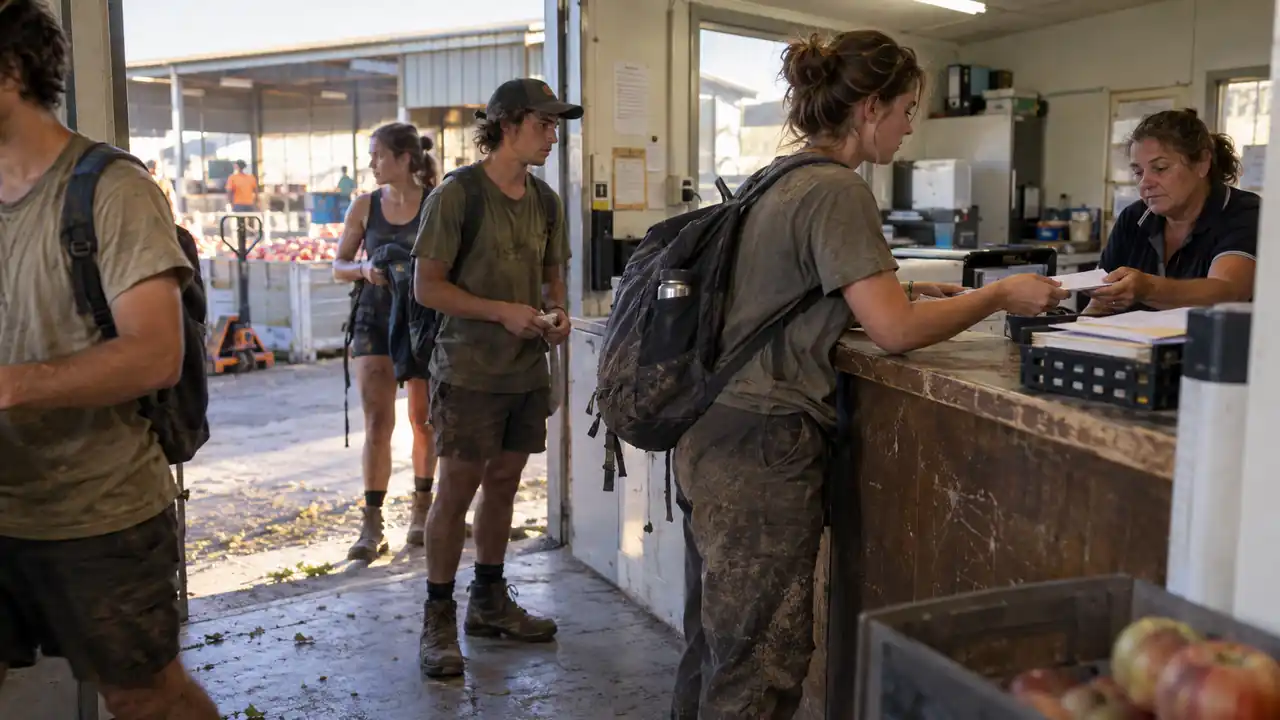


working holiday visa Australia is a temporary visa pathway for eligible young adults who want to holiday in Australia, work to help fund the trip, study briefly, and possibly qualify for a second or third year. The main mistake is treating it as one simple visa when Australia runs two related streams: Working Holiday subclass 417 and Work and Holiday subclass 462. Your passport, age, prior Australian visa history, evidence, country cap position, work plans, and timing can all change the safer decision.
Answer first: working holiday visa australia is usually for eligible passport holders aged 18 to 30, with some passport groups allowing applications up to 35, who want a temporary Australian holiday with work rights. It is not a direct permanent residence visa, a long-term employer-sponsored visa, or a guaranteed route to migration. This guide explains subclass 417 versus subclass 462, work limits, specified work, documents, mistakes, verification steps, and safer planning.
If your passport, age, travel timing, previous Australian visa history, or work plans create uncertainty, contacting a migration adviser before lodgement can prevent a simple mistake from becoming a refusal, delay, or lost season; for a scenario-based review, use Contact Us before you build your plan around assumptions.
Planning a working holiday should feel exciting, but the visa decision needs precision. A short review can help you confirm the correct subclass, whether a ballot or cap affects you, what evidence you need, and whether your work plan could support a second or third visa later.
Contents
What the Working Holiday Maker pathway is really for
working holiday visa australia belongs to the broader Working Holiday Maker program, which the Department of Home Affairs describes as a reciprocal program allowing young adults to have a 12-month holiday in Australia while undertaking short-term work and study. The official program overview is available through the Australian Government’s Working Holiday Maker program page. The policy logic is simple: the holiday remains the main purpose, while work rights make the trip financially possible.
This distinction matters. The visa can give flexibility across many short-term roles, but it does not remove work conditions. It can support an exploratory year for study, sponsorship, skilled migration, or a later return, yet those options require separate eligibility.
For many applicants, the first decision is whether their passport falls under subclass 417 or subclass 462, whether the age rule fits on the application day, and whether any country-specific cap or pre-application process applies. A subclass 417 applicant may face a simpler path but still needs to respect visa conditions.
Subclass 417 versus subclass 462
working holiday visa australia is often used casually online, but the legal pathway is split into two subclasses. The Department’s official page for First Working Holiday visa subclass 417 applies to one group of eligible passports, while the official page for First Work and Holiday visa subclass 462 applies to another. Do not choose based on wording used by a blog, recruiter, or friend; choose based on the passport country list and current Home Affairs requirements.
| Decision point | Subclass 417 Working Holiday | Subclass 462 Work and Holiday | Why it matters |
|---|---|---|---|
| Passport basis | For eligible passport countries listed under subclass 417. | For eligible passport countries listed under subclass 462. | The passport normally determines the subclass; choosing the wrong one can waste time and money. |
| Typical age setting | Often 18 to 30, with some passport groups allowing up to 35. | Generally 18 to 30 unless a specific arrangement says otherwise. | Age is assessed at application, so timing near a birthday can be decisive. |
| First visa purpose | Extended holiday with work rights to help fund the stay. | Extended holiday with work rights to help fund the stay. | The holiday purpose remains central even though work is permitted. |
| Extra evidence | Usually fewer additional criteria than subclass 462, subject to current rules. | May require education, functional English, support evidence, ballot selection, or country-specific steps. | Subclass 462 evidence problems are a common source of delay or refusal risk. |
| Country caps or ballots | Usually not the same cap structure as subclass 462. | Some countries have annual caps, paused periods, closures, or ballot processes. | Timing may matter as much as eligibility for high-demand countries. |
| Second and third visa planning | Specified work rules may apply, with important exceptions for some passport holders. | Specified work rules usually matter for later visas. | Your first-year job choices can determine whether you can extend your stay. |
A practical comparison should also include processing expectations, because the Department publishes changing visa processing information rather than a fixed guarantee. Check the official visa processing times page before booking non-refundable flights, resigning from work, or accepting a start date in Australia.
Eligibility checks before applying
working holiday visa australia eligibility starts with passport, age, location, previous visa history, health, character, funds, and evidence quality. The safest method is to build a pre-lodgement checklist before creating the application, because the online form may feel simple while the legal consequences are not. Confirm the exact subclass, whether you have previously held a Working Holiday Maker visa, whether your application location is correct, and whether any dependent child issue affects eligibility.
Funds and onward travel evidence are often misunderstood. Applicants may need to show enough money to support the initial stay and, where relevant, funds for departure from Australia. Evidence expectations can change, so do not rely on old screenshots or social media summaries.
At Australia Pathways, strong planning starts with a simple decision tree: correct subclass, clean evidence, realistic travel timing, and a backup plan if the visa is delayed or conditions restrict your preferred job.
Work and study rules in Australia
working holiday visa australia gives broad work flexibility, but not unlimited employment freedom. The Department’s Working Holiday Maker work conditions guidance explains that holders can generally work in any occupation or industry, but visa condition 8547 usually limits work with the same employer to a maximum of 6 months unless an exemption or permission applies. This is one of the most important compliance rules in the pathway.
The phrase “same employer” can be more complex than applicants expect. Changing agencies, affiliates, subcontracting structures, or locations may not solve the problem if the arrangement keeps you in the same role with the same business. Self-employed applicants also need care, because the end user can matter.
Short-term study is also possible, but this visa should not be treated as a substitute for a student visa. If your main goal is a degree, long course, professional licensing pathway, or packaged study plan, a student visa strategy may be more coherent. If your main goal is travel with a brief course, the Working Holiday Maker framework may be suitable.
Second and third visa planning
working holiday visa australia can become a two-year or three-year experience for some applicants, but only if later visa requirements are respected. Many applicants first discover “specified work” after they have already spent months in jobs that do not count. If you want the option of a second or third year, plan early.
Specified work rules differ by subclass and later visa stage. A second visa often requires a period of eligible specified work while holding the first visa, and a third visa often requires a longer period while holding the second. The work must usually be in eligible industries and eligible locations or approved disaster recovery contexts, and records must be credible.
There are also special arrangements that can change the normal strategy for some passport holders. For example, UK passport holders have had major changes allowing access to multiple subclass 417 visas without the same specified work requirement, but applicants should always verify the rule for their own passport and lodgement date. Treat every exception as passport-specific, date-specific, and evidence-specific.
Scenario matrix: safer decisions before you lodge
working holiday visa australia decisions become easier when you test your plan against real scenarios. The table below is designed to expose risk early, before you pay for flights, accept work, or assume a later visa will be available.
| Scenario | Risk level | Safer next move | Verify before acting | Common mistake |
|---|---|---|---|---|
| You are close to turning 31 or 36, depending on passport rules. | High | Check the age rule for your passport and lodge only when the subclass is confirmed. | Eligible age on the official subclass page and the exact application date. | Assuming the rule is based on intended travel date instead of application timing. |
| Your country is under subclass 462 and demand is high. | High | Check cap, pause, closure, or ballot information before preparing a travel calendar. | Current country cap or pre-application process. | Preparing documents after the annual places have paused or closed. |
| You want a second year but prefer city hospitality work only. | Medium | Plan eligible specified work early or accept that a second year may not be available. | Eligible industry, postcode, dates, and records. | Working hard in a job that does not count for extension. |
| An employer wants you for more than 6 months. | High | Review condition 8547, exemptions, and permission options before the 6-month point. | Same employer rule, role, location, and any exemption. | Continuing work first and asking permission after the limit has passed. |
| You plan to use the year as a bridge to skilled migration. | Medium | Separate the holiday visa plan from the skilled migration plan and assess both. | Occupation, skills assessment, English, points, sponsorship, and timing. | Believing a Working Holiday Maker visa automatically leads to permanent residence. |
Copy-friendly checklists for actions and documents
working holiday visa australia preparation should be practical, not dramatic. Use the following lists as a clean pre-lodgement structure, then adapt them to your subclass and passport country.
Action checklist before lodgement
- Confirm whether your passport belongs to subclass 417 or subclass 462.
- Check the current age rule for your passport country.
- Check whether a country cap, pause, closure, or ballot applies.
- Confirm whether you are applying for a first, second, or third Working Holiday Maker visa.
- Review health and character questions honestly before lodgement.
- Check whether your intended arrival date is realistic against current processing information.
- Decide whether you want to preserve the option of a second or third visa.
- Map possible work against the 6-month same-employer rule.
Document checklist to prepare
- Valid passport identity page and any required national identity evidence.
- Clear personal details matching the passport exactly.
- Recent bank evidence showing available funds where requested.
- Evidence for education or functional English if required for subclass 462.
- Support letter, government approval, ballot invitation, or country-specific evidence if applicable.
- Previous Australian visa details if you have visited, studied, worked, or held a Working Holiday Maker visa before.
- Specified work evidence if applying for a second or third visa.
- Health examination or police certificate evidence if requested.
If your plan includes a second year, an employer offering long-term work, a country with caps, or any previous Australian visa complication, a pre-lodgement review can be much cheaper than repairing a problem later. We can help you organise the facts, identify the correct risk points, and prepare a more coherent application strategy.
Mistakes that create avoidable visa problems
working holiday visa australia applications often fail in small details rather than big ideas. The applicant may be eligible, but the application becomes weak because the wrong subclass is selected, evidence is incomplete, or later work plans contradict visa conditions.
| Mistake | Why it causes trouble | Practical fix |
|---|---|---|
| Choosing the subclass from a nickname rather than passport country. | The terms “working holiday” and “work and holiday” are similar, but the legal subclasses are different. | Start with the official passport country list and subclass page. |
| Assuming every applicant can work for one employer all year. | Condition 8547 usually limits work with the same employer to 6 months unless an exemption or permission applies. | Track employer, location, role, dates, and permission timing from the first day of work. |
| Leaving specified work planning until late in the first year. | Eligible work must meet industry, location, timing, and evidence requirements. | Plan extension work early and keep records as you go. |
| Booking non-refundable travel before checking current processing information. | Processing can change and is not a personal guarantee. | Use flexible bookings and verify current processing guidance before commitments. |
| Relying on another applicant’s approval story. | Passport, age, evidence, country cap, and timing can all differ. | Build your own document list and decision record. |
Verification workflow before you submit
working holiday visa australia planning is strongest when you verify the pathway in a fixed order. Do not start with flights, farm jobs, or hostel bookings. Start with legal eligibility, then evidence, then logistics.
- Identify your passport country and match it to subclass 417 or subclass 462.
- Read the official subclass page for the first, second, or third visa you need.
- Check age, location, previous visa, dependent child, health, character, and funds requirements.
- For subclass 462, verify education, English, support evidence, cap, or ballot requirements before assuming you can lodge immediately.
- Check current processing guidance and avoid non-refundable commitments until your timing risk is acceptable.
- If you want a second or third visa, map specified work before choosing jobs.
- If you will work long-term with one employer, verify condition 8547 before the 6-month point.
- Save every official page or instruction you relied on with the access date for your own records.
- Review the final application for consistency between passport, travel history, documents, and declarations.
FAQs
Is this visa the same as permanent residence?
No. It is a temporary holiday visa with work rights, not a direct permanent residence visa. Some people later explore skilled, employer-sponsored, partner, or study pathways, but those are separate assessments with separate requirements.
Can I work for the same employer for the whole year?
Usually, you must be careful because condition 8547 commonly limits work with the same employer to 6 months. Some exemptions or permission options may apply, but you should verify them before the limit is reached.
Do I need specified work for a second visa?
Many applicants need eligible specified work for a second or third Working Holiday Maker visa. The rule depends on subclass, passport, work type, location, dates, and any special arrangement, so verify it before choosing jobs.
What is the difference between subclass 417 and subclass 462?
The main difference begins with passport eligibility. Subclass 462 may also involve additional requirements such as education, English, support evidence, caps, or ballot steps for some countries, while subclass 417 often has a simpler evidence profile.
Should I book flights before the visa is granted?
It is safer to avoid non-refundable commitments before grant because processing times can change and individual applications can be delayed. If you must book early, use flexible options and avoid employment or housing commitments that depend on a guaranteed grant date.
Can I study while holding this visa?
Short-term study is generally possible, but this visa is not designed for long academic programs. If study is your main purpose, compare the plan with a student visa strategy before choosing the Working Holiday Maker route.
What if my country cap is closed or paused?
You may need to wait, monitor official updates, or follow a required pre-application process if your country is subject to caps or ballot arrangements. Do not pay third parties who promise to bypass official caps or selection systems.
Can this visa help me find sponsorship?
It can give you lawful time in Australia to meet employers and gain local experience, but sponsorship is not automatic. You still need to satisfy the separate requirements for the relevant sponsored visa, including occupation, employer, salary, skills, and compliance rules.
Conclusion and next steps
working holiday visa australia can be one of the most flexible ways to experience Australia, earn money during the trip, and test future options, but it rewards careful planning. The best applicants do not simply lodge and hope. They confirm the correct subclass, prepare evidence, check caps or ballots, understand work limits, plan specified work early if extension matters, and keep future migration goals separate from the temporary holiday purpose.
Your next step is to write down five facts: your passport country, your age on the intended application date, whether this is your first or later Working Holiday Maker visa, whether you need a second-year option, and whether your preferred job could breach the 6-month same-employer rule. Once those facts are clear, the pathway becomes much easier to assess.