
Last verified by Nima Parham — 27 October 2026.
Reviewed against primary visitor and historical sources on 26 October 2026. Ticket prices, tour options and hours can change. Historical stories should distinguish documented evidence from later folklore.
The Old Melbourne Gaol is one of those museums where the building itself is an exhibit. Its narrow cells, heavy walls and gallows tell visitors something about the ambitions and anxieties of colonial Victoria. Yet it is tempting to let a single celebrated prisoner dominate the story. Ned Kelly was executed here in 1880, but for almost eighty years the gaol held people who had committed very different offences, including women and children and people punished for poverty-related behaviour.
A better visit treats the site as three histories at once: a nineteenth-century institution of punishment, a stage on which the Ned Kelly legend was made, and a modern museum trying to make incarceration intelligible to contemporary audiences. The operator is the National Trust of Australia (Victoria), whose interpretation offers more than the familiar “haunted prison” approach.
Begin with a room, not a famous name
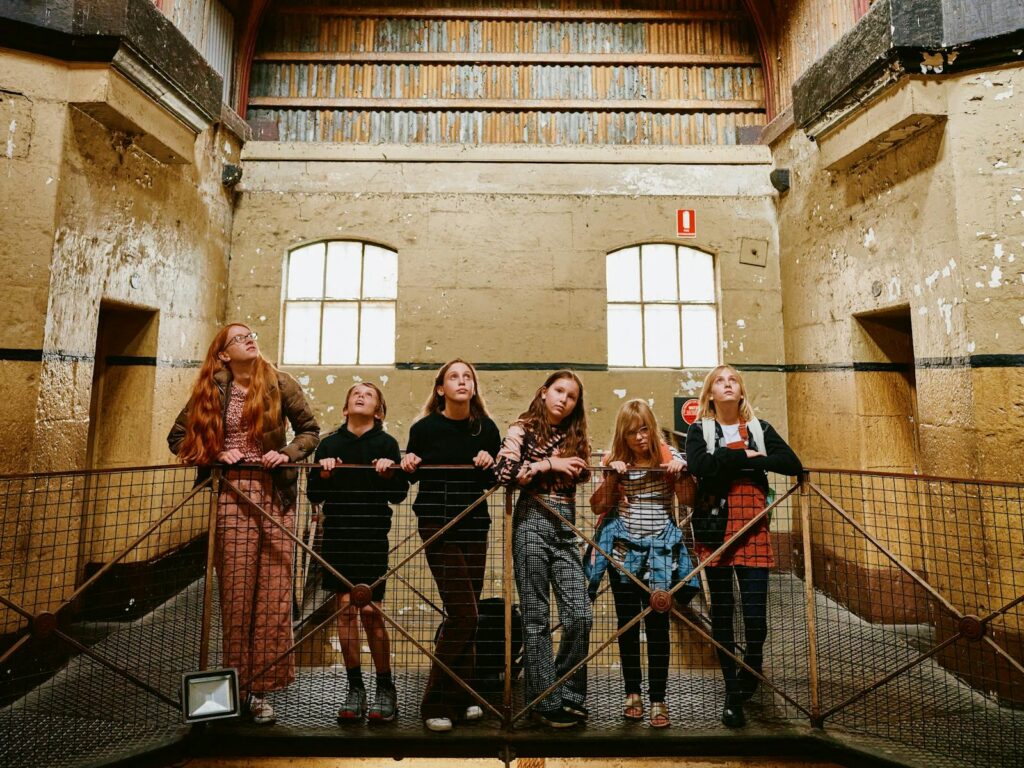
Walk into a former cell and notice its scale. A gaol is designed to manage bodies and behaviour: where a person sleeps, whether they can see daylight, who can speak to whom, and how they are watched. Such features are easy to overlook when the focus is entirely on sensational crime stories.
The National Trust’s historical account states that construction began in 1841 and that the early gaol was soon overcrowded. Melbourne’s rapid growth around the 1850s gold rush added pressures to a penal system that already struggled with poverty and limited welfare provision. The surviving block was completed in 1858, while the wider complex expanded over succeeding years.
The gaol’s social history is not separate from architecture. The scale of the cells and arrangement of corridors reflected assumptions about discipline, isolation and reform. The building cannot prove whether each punishment was fair; it can show visitors how the state organised punishment and how close people were kept to the machinery of authority.
Ned Kelly: the historical person and the manufactured last words
Edward “Ned” Kelly has become a national symbol capable of absorbing contradictory meanings: bushranger, rebel, murderer, victim of injustice and folk hero. The State Library Victoria research guide traces the conflict, robberies, capture at Glenrowan and his journey through the courts. Kelly was convicted of the murder of Constable Thomas Lonigan and hanged at Old Melbourne Gaol on 11 November 1880.
It is crucial not to simplify that record into one sympathetic slogan. Police officers were killed, the legal process drew controversy, and later generations have interpreted those events very differently. The State Library’s trial-and-execution guide also highlights a telling historical correction: the famous final words “such is life” are highly contested. Most reported accounts instead recorded variants of “Ah well, I suppose.” An article that asserts the popular phrase as a proven quotation would mislead the reader.
Visitors can explore this uncertainty through the museum and archival sources rather than treating the last-words question as a piece of tourist trivia. Official records also survive: the Victorian Government Gazette of November 1880 reproduces the formal certification of Kelly’s execution. The primary document cannot settle every subsequent cultural argument, but it does anchor the date and institutional process.
The National Trust’s Ned Kelly’s Last Stand tour focuses on his final period, trial and execution. Such tours may carry an extra charge, have scheduled sessions and use stairs. If the Kelly story is your main reason to visit, checking that the specialised experience is operating before buying general admission is worthwhile.
Whose stories disappear when Kelly takes centre stage?
The most historically revealing room may not be the one associated with Kelly. The gaol incarcerated men, women and children, and the National Trust has developed a Women and Children of the Gaol exhibition. That material challenges visitors to look at the social conditions which placed vulnerable people within the prison system.
A child imprisoned in nineteenth-century Victoria cannot be understood only through the modern category of “criminal”. Laws, poverty, protection systems and family circumstances all shaped who was confined. A careful interpretation should ask what choices, if any, were available to them. The subject is inherently difficult, but omitting it produces a distorted portrait of who the institution served.
Museums also inherit ethical questions from historical exhibitions. Death masks and nineteenth-century attempts to interpret faces and skulls as evidence of criminal character reflect discredited ideas as well as contemporary fascination. The State Library explains the history of Kelly’s death mask in the context of these practices. Seeing an object is different from endorsing the ideas under which it was created.
The wider justice precinct
Old Melbourne Gaol does not stand entirely alone. The nearby former City Watch House and historic court buildings remind visitors that arrest, detention, trial and punishment involved a network of institutions. The National Trust’s precinct overview notes that the City Watch House remained in use until 1994—a useful reminder that the history of custody is not confined to distant colonial decades.
Some guided experiences invite visitors to imagine the procedures of arrest and detention. They can prompt productive questions, but a staged interpretation is not the same as the unmediated experience of a historical prisoner. Think of it as a way into the subject, and then use documentary material to test what the performance suggests.
A visitor interested in architecture might compare the imposing bluestone exterior with the cells inside. A visitor interested in law might ask why offences were punished as they were. Someone drawn by Kelly can use the museum to separate the documentary record from later legend. Those different questions lead to a more rewarding visit than treating every room as a photo opportunity.
Plan a visit in 2026
The gaol is at 377 Russell Street in central Melbourne. According to the site’s own visitor information and the National Trust’s current hours notice, standard daytime opening is 10am–5pm, with closure on Good Friday and Christmas Day. Night tours operate on selected evenings. Confirm the details for your date because one-off events can change access.
General admission includes a self-guided visit, with an English- and Mandarin-language audio guide listed by the operator. Special activities such as an interactive Watch House visit or a dedicated Ned Kelly tour may need separate payment or availability checks. The official booking page should take precedence over a copied fee table: even different operator-controlled pages may show prices captured at different update times.
Allow enough time to visit the cells and exhibitions thoughtfully. The operator recommends arriving by mid-afternoon rather than assuming that entry just before closing will be satisfying. The site contains stairs and heritage spaces; consult its visitor team about step-free access, mobility needs and alternatives before purchasing tickets. Do not assume a historic building has the same access profile as a purpose-built museum.
For children, consider the content: executions, imprisonment and the treatment of vulnerable people can be confronting. A daytime self-guided visit may suit some families better than a theatrical night experience. Reading age guidance and tour descriptions is more reliable than assuming that every offering at the same venue is equally suitable.
Is the night tour worth it?
That depends on what you hope to encounter. The National Trust advertises night experiences with different storytelling approaches, including those drawing on ghostly atmosphere and the history of executions. They are not replacements for the interpretive galleries and historical materials available by day.
If you like dramatic performance, a night tour may offer a memorable way to experience dark corridors. If you care chiefly about legal history, begin with the daytime exhibits and archives. Some people prefer to avoid entertainment built around suffering; that is a legitimate choice, not a failure to appreciate the museum.
Questions to carry through the museum
What kinds of conduct brought people here? How did class, childhood, gender and institutional power shape who was imprisoned? Which stories have documentary evidence, and which have been romanticised? When a museum reconstructs a courtroom or cell scene, what does it know and what must it imagine?
Those questions are useful far beyond this particular building. The Old Melbourne Gaol is important not because its best-known prisoner supplies a gripping ending, but because it reveals how a society defined order, administered punishment and later chose what to remember. The gallows deserve attention; so do the ordinary people whose names rarely made the headlines.
Visit for the stories, but remain alert to the difference between evidence and folklore. The National Trust and State Library Victoria provide a sound combination of visitor guidance and archival context for that work.