
Last verified by Nima Parham — 27 October 2026.
Practical visitor update: 26 October 2026. Check events, access and transport services for your chosen date.
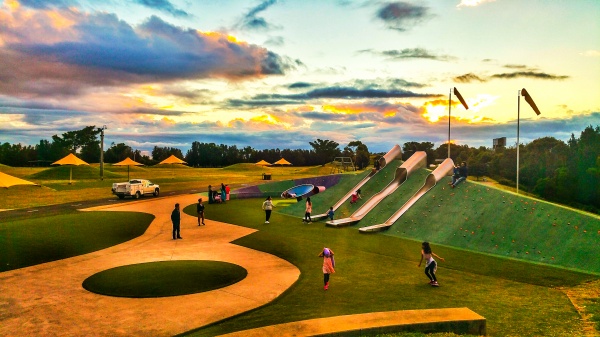
Sydney Olympic Park adventures do not have to revolve around a major concert or sporting fixture. Beyond the stadiums lies a patchwork of cycling routes, wetlands, bird habitats, public art and traces of Sydney’s industrial past. The park’s appeal is the contrast: a major-event precinct beside ecological spaces where visitors are encouraged to slow down.
The simplest plan is to choose one active route and one quiet experience. A family travelling with young children might pair Bicentennial Park with a short cycle. A visitor interested in nature can walk through the mangroves and observe birds. Someone curious about post-industrial landscapes can combine the Brickpit Ring Walk with the surrounding parklands.
A cycling route for each level of energy
The Sydney Olympic Park Authority’s cycling guide provides real distances, not vague promises of “endless trails.” Its Olympic Circuit is 7.6 kilometres and is described as a moderate ride; the River Heritage Circuit is 11 kilometres, while the Parklands Circuit is 5.5 kilometres and graded low difficulty. These are official route descriptions, not estimated ride times for your particular family.
Choose the route around the least confident rider. Bring water, check the conditions, allow room for stops and make sure bikes and helmets suit the users. The cycling guide also points to a children’s loop at Bicentennial Park, a less ambitious option for younger riders. Do not confuse a cycle route passing near a boardwalk with permission to cycle on the boardwalk itself.
Badu Mangroves: enter on foot
The Badu Mangrove Boardwalk offers a close view of protected estuarine vegetation near Homebush Bay. The Authority describes it as part of a 65-hectare mangrove area with substantial coastal saltmarsh habitat. Importantly, dogs and cycling are not permitted on the boardwalk. This matters when planning a trip with a bike or pet.
Interpretive material on the walk includes the Dreaming Track poetry project associated with Lorna Munro and Shannon Foster. It is worth engaging with those words rather than treating the boardwalk solely as a photo location. The wetland is also a habitat: keep to marked paths, do not disturb wildlife and give other visitors space.
Brickpit Ring Walk: an industrial landscape turned refuge
The Brickpit Ring Walk is a striking elevated circular path above a former brickmaking site and a freshwater wetland. The Authority describes a 550-metre ring and highlights the protected Green and Golden Bell Frog. The architecture allows visitors to appreciate a sensitive habitat without walking through its centre.
Treat frog sightings as a possibility, never a guarantee. A better reason to visit is the interpretation of the industrial landscape and the way the site has changed. The built environment, wetland recovery and wildlife form one story rather than three unrelated attractions.
Where to look for birds
The official bird-watching guide identifies Narawang Wetlands, the Brickpit conservation area and other habitat areas, with examples of species visitors might observe. A pair of binoculars can improve the experience, especially for children interested in birds; quiet observation often works better than rushing between viewpoints.
Wildlife areas are not guaranteed displays, and weather, time of day and seasonal movements influence observations. Stay within the visitor routes and follow the Authority’s posted directions.
Getting there without an event-day surprise
Olympic Park station is on Sydney’s T7 service, with connections at Lidcombe. The official public-transport guide recommends checking current Transport for NSW services, particularly on major-event days when extra trains or altered arrangements may apply. The ferry wharf is not immediately beside the stadium precinct, so check the onward walk or bus connection.
Parking is not uniformly free. The Sydney Olympic Park parking guide distinguishes town-centre parking, event parking and parklands parking. In designated parklands areas, drivers must register their number plate to receive the first two hours without charge, after which charges apply. Major-event pre-booking is different from casual parking; verify the precise site and date before arriving.
Make the outing work for different visitors
A wheelchair user, a family pushing a pram and a group planning a brisk cycle will not experience the same path network. Before setting a route, check the Park Authority’s individual attraction pages for restrictions and the current parking and access guidance for where to begin. Be especially careful about assuming that a boardwalk permits every kind of recreational use simply because it looks wide and level.
An event-day calendar matters even when you are not attending an event. Crowds can affect train services, parking availability and how quickly a visitor reaches a particular parkland. If you are bringing a camera, observe other visitors’ privacy and remember that wetland wildlife is better watched quietly than approached. The most successful trip leaves enough unplanned time to listen, look and change course.
One practical half-day plan
Start at Bicentennial Park, walk the Badu Mangrove Boardwalk, then choose either the Parklands cycling circuit or the Brickpit Ring Walk depending on your group. Leave time for shade and water, and use the Authority’s cycling details and public-transport advice to avoid a rushed return journey.
The best Sydney Olympic Park outing is not necessarily the most packed. A few well-chosen experiences reveal why the precinct is both a living city destination and a landscape still being restored.