
Last verified by Nima Parham — 27 October 2026.
A garden with two very different starting points
Mount Lofty Botanic Garden sits in the Adelaide Hills, where a visit can feel like a quiet walk beside a lake or a demanding climb through steep gullies. The difference often begins at the car park. The official visitor guide identifies an upper entrance near Mount Lofty Summit Road and a lower entrance off Lampert Road. Visitors seeking the most accessible lakeside route are generally better served by the lower entrance. That is useful information missing from many generic guides, which promise an easy garden stroll without distinguishing flat paths from the hills around them. Plan according to your group's walking ability, not merely the size of the grounds.
The lower entrance is a good start for a slower visit
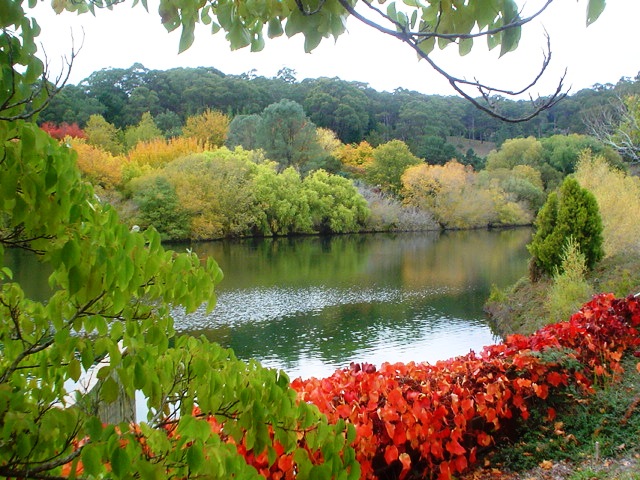
The lakeside area is particularly suitable for visitors who want to move gently, enjoy reflections and look at seasonal plantings without committing immediately to steep terrain. The Lakeside Loop is described by the garden as a one-kilometre route with minimal inclines. It includes plant-themed artworks with braille interpretation. The adjacent Lower Loop is about three kilometres, also generally gentle, although individual abilities and weather still matter. These are not promises that every corner of the garden is wheelchair accessible. The garden's broader terrain is hilly, so anyone requiring step-free access should rely on the published route map and current accessibility notice rather than assuming a garden path is equivalent to an urban footpath.
Autumn colour is only one chapter
Mount Lofty is famous for its autumn leaves, but colour is not guaranteed on a particular weekend. Seasonal transitions are influenced by rainfall, temperature and the mix of deciduous species. Spring offers different attractions: fresh leaves, flowering plants and changing light in the gullies. Summer visits call for attention to heat and fire danger, while winter can be damp and cool under tree cover. A quieter trip outside the peak autumn period may allow more time to notice form, bark and the design of collections. The garden is a living scientific and horticultural space, not just a photography backdrop. Avoid stepping into planted beds to reproduce an image, and never remove material.
Choose a route by effort, not by how impressive it sounds
The garden's walking-trails page differentiates the one-kilometre lakeside route from the Central Loop, Boundary Loop, Rhododendron Trail and Heysen Trail segments, some of which have medium to steep inclines. A visitor with limited time may gain more from one slow loop than from a rushed attempt to complete every trail. Carry water and shoes suitable for uneven ground. The routes can feel different after rain, when wet leaves and surfaces reduce traction. Always consider the time needed to return to your starting entrance. A beautiful downhill walk is only half of a journey if the return requires climbing back to the upper car park.
Current opening hours and parking
The official plan-your-visit page lists seasonally changing closing times. For October through March, it gives 8:30 am to 4 pm on weekdays and 8:30 am to 6 pm on weekends and public holidays; other seasons differ. Check the page before leaving, because hours and exceptional closures can change. Entry to the garden is free, but parking in the upper and lower car parks is ticketed on ordinary weekdays and Saturdays; Sundays and public holidays are listed as free. There is no good reason to quote a single universal closing time in a travel article. Budget separately for parking and allow time to return to your vehicle before gates close.
Fire danger and rules that genuinely matter
The garden closes when the fire-danger rating is extreme or catastrophic. On a hot summer day, treat that restriction as a safety rule, not a scheduling inconvenience. The official regulations also prohibit cycling, drones, pet dogs other than permitted assistance dogs, swimming and entering planted beds. These restrictions protect collections as well as visitors. Check the Bureau of Meteorology and the garden itself for same-day notices. If the visit is cancelled by a fire-danger closure, select another activity rather than seeking an unmonitored entrance. Being present in a botanical collection comes with a duty not to damage it.
A visit for people who want more than pictures
Try looking closely at one contrasting group of plants, comparing leaf shape, texture and the way sunlight reaches them. Read interpretation where it is available and think about why species from different climates are growing in a managed collection. Families can make a game of noticing seed pods and tree forms without collecting anything. Photography can be part of the visit, but it works best when it does not obstruct others on narrow paths or encourage entry into fragile planting areas. The garden offers guided walks on scheduled Thursdays, subject to conditions. A guided visit may be more rewarding for someone particularly interested in horticulture than a rapid self-guided circuit.
Putting a realistic half-day together
For a gentle morning, arrive at the lower entrance, check the map and take the Lakeside Loop first. Add part of the Lower Loop if energy and time permit, then pause before deciding whether to tackle a steeper route. If your group enjoys strenuous walking, start with a clear estimate of elevation and return time, and leave room for a rest. Bring a layer even on a sunny day; the Adelaide Hills can feel cooler than the city. Food and facilities should be checked before arrival rather than assumed at every entrance. The garden is about 25 minutes' drive from central Adelaide under ordinary conditions, but traffic and parking availability vary.
Why the garden is worth its own day
Mount Lofty Botanic Garden rewards attention more than speed. A well-chosen route can reveal plant diversity, seasonal character and the skill of designing a landscape for both study and recreation. The practical keys are choosing the right entrance, understanding the difference between flat and steep routes, checking fire-danger closures and protecting the collection. Those decisions create a better day than any promise of seeing 'all the highlights' in a single sprint.
Photographers should build the day around light and conservation
The most striking composition is not always from the busiest path. Soft light can reveal the structure of leaves and the texture of bark, while an overcast day may offer excellent detail without harsh contrasts. Never step over planting barriers or move interpretive signs for a photograph. Give people using mobility aids room on narrow sections of a trail. If taking professional or commercial photographs, check the garden's filming rules in advance; visitor access does not necessarily grant unrestricted commercial-use permission. The visitor information specifies visitor conduct and prohibited activities, including drones.
Bringing children without turning the garden into a playground
Children often enjoy comparing leaf shapes, spotting tiny changes in the season and following paths around the lake. These are valuable ways to learn without running through planted beds. Set a comfortable walking goal, identify toilets before setting off and carry snacks and water. A stroller may work better along the lakeside route than on steeper gullies; ask about current access if your child's mobility is a concern. The garden prohibits ball games and climbing trees, which can protect both people and collections. Treat the site as a living museum, not as a playground where every activity is permitted.
Make weather a decision gate
Before departure, check the official fire-danger notice and think about rainfall, wind and temperature changes in the Adelaide Hills. Summer closure rules take precedence over a family's schedule. If the day has a high level of fire risk or an extreme weather warning, choose another outing. In the cooler seasons, damp ground and fallen leaves can make inclines more slippery. Carry a simple map and keep enough time for the return ascent if you are starting high and walking downhill. The correct plan may be a short visit followed by a café elsewhere, rather than a full-day trek through every named loop.
Why accessible route information should come first
For a person using a wheelchair or a visitor travelling with a pram, the wrong entrance can turn an attractive morning into an avoidable difficulty. The lower car park and accessible lakeside trail are highlighted in the official garden guide. That is not a guarantee of access to every gully or lookout; consult current site information for the route you intend to use. Good itinerary design begins with the needs of the people on the trip, then chooses scenery that those needs genuinely allow.