
RPL project examples ICT Business Analyst can feel confusing at first—especially if you have solid experience but don’t have an ICT degree (or your ICT study is not considered sufficient). If you’re starting your ACS pathway, it helps to understand what “counts” as a project in the ACS sense and how an ICT Business Analyst role is typically assessed. For background reading on the overall process, see RPL for ACS skills assessment.
Many applicants get stuck because they choose projects that are “important at work” but hard to evidence as ICT Business Analysis, or they describe projects in a way that sounds like general administration, operations, or management. The goal is to show that you performed ICT-relevant analysis work that connects business needs to technology outcomes.
◆ Sydney-based Australian Pathways RPL and ACS writing team can best help with tailored RPL reports and documents, based on your exact background and the projects you can genuinely support.
What RPL Means In The ACS Context (Plain English)
In the ACS (Australian Computer Society) context, RPL is the pathway that helps experienced ICT professionals demonstrate their knowledge and skills when their formal ICT qualifications are missing, outdated, incomplete, or not aligned to ACS requirements.
Think of it like this:
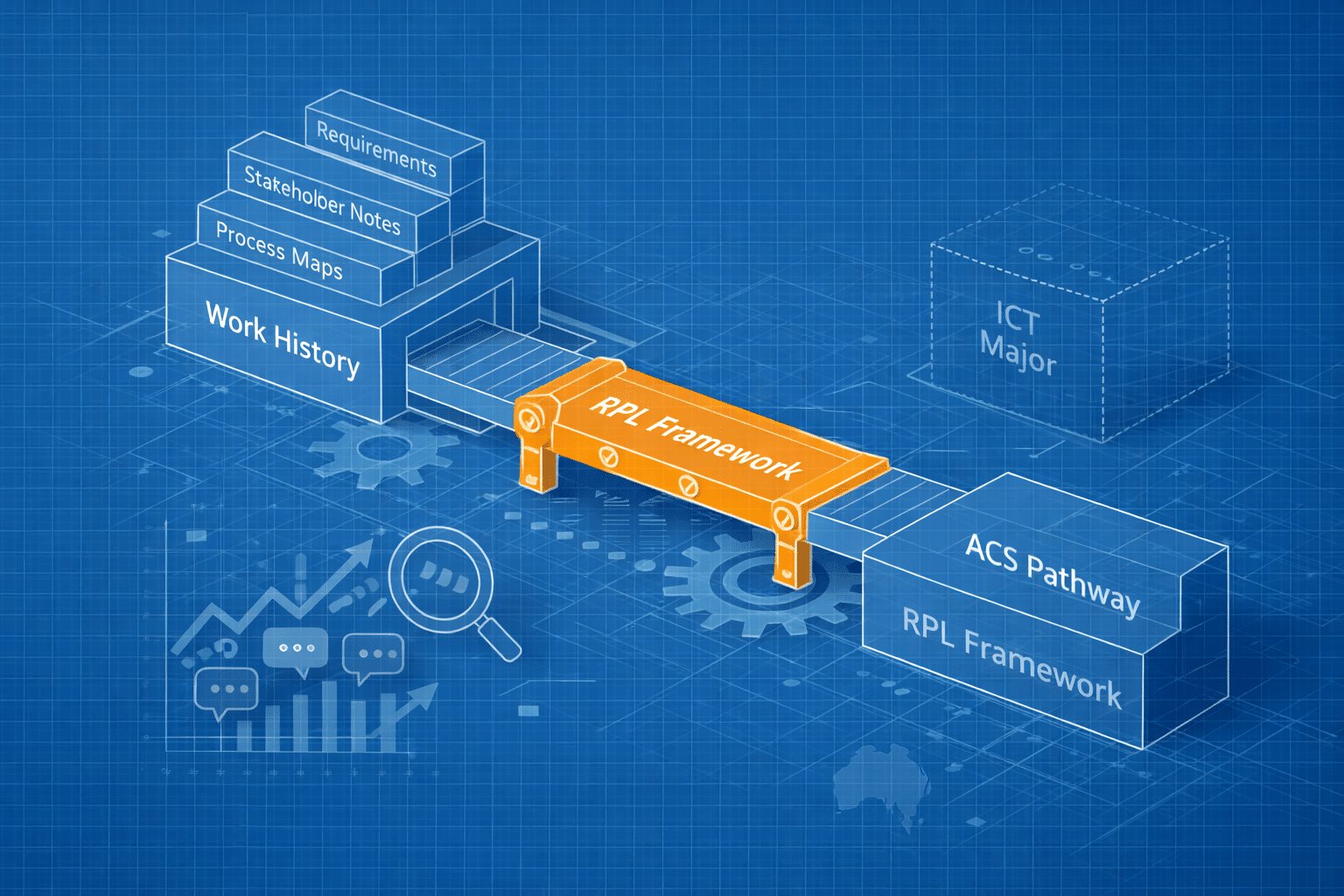
- Your work history shows what you have done.
- Your RPL content explains how you did it (conceptually), what ICT knowledge you applied, and what outcomes you delivered.
- Your supporting documents back up that your employment and projects are real and consistent.
ACS is not looking for perfection or fancy language. It is looking for credibility, relevance, and consistency.
To learn more about the assessing body itself and how it sits within the Australian ICT migration ecosystem, you can also review the front page of the Australian Computer Society.
Who Is An ICT Business Analyst (ANZSCO 261111)?
An ICT Business Analyst (ANZSCO 261111) typically works at the intersection of:
- Business Needs (Objectives, Problems, Constraints, Stakeholders)
- Technology Solutions (Systems, Data, Integrations, Platforms, Software Changes)
- Delivery Methods (Agile, Waterfall, Hybrid, Iterative Delivery)
In general terms, an ICT Business Analyst helps organisations define what should be built or changed in a system, why it matters, and how success will be measured—then supports delivery by clarifying requirements, reducing ambiguity, and improving alignment between stakeholders and technical teams.
Common ICT BA responsibilities may include:
- Discovering and documenting functional and non-functional requirements
- Mapping processes and identifying improvement opportunities
- Translating business rules into system logic
- Supporting solution options analysis and feasibility discussions
- Facilitating workshops, stakeholder interviews, and approvals
- Supporting testing by defining acceptance criteria and validating outcomes
What matters for ACS is that your work shows ICT relevance, not just business operations.
High-Level Steps: ACS Skills Assessment When You Need RPL
If you are using RPL, the overall ACS skills assessment pathway is usually understood in these high-level stages:
- Confirm Your Nominated Occupation
- For this article, the focus is ICT Business Analyst (ANZSCO 261111).
- Your employment evidence and project narratives should align with this role.
- Build A Coherent Employment Timeline
- Your CV, reference letters, and evidence should match on dates, job titles, and duties.
- Inconsistencies are a common reason for delays.
- Prepare RPL Content (Conceptually, Not As A Template)
- You generally need to demonstrate ICT knowledge applied in real work contexts.
- Your projects should show problem-to-solution thinking and traceable deliverables.
- Collect Supporting Evidence
- Employment references, payslips, tax documents, contracts, or other proofs.
- Project artefacts (sanitised if necessary) that support what you claim.
- Submit And Respond If Additional Information Is Requested
- Sometimes assessors ask clarifying questions or request more evidence.
For broader migration context and official guidance, you can reference the front page of the Australian Government’s immigration site at immi.homeaffairs.gov.au.
What ACS Usually Wants From “Project Examples” (Without Giving Copy-Paste Content)
A key misunderstanding is thinking ACS wants “big famous projects.” In reality, ACS wants projects that clearly demonstrate:
- Your personal contribution (what you did, not what the company did)
- ICT BA methods and thinking (analysis, elicitation, validation, documentation)
- A clear connection between requirements and a technology outcome
- Evidence that you worked with technical stakeholders (developers, testers, architects, data teams)
- Deliverables that make sense for an ICT BA role (BRD/FRD, user stories, process models, acceptance criteria, traceability)
When selecting RPL project examples ICT Business Analyst, aim for projects where your role was central and your outputs can be described clearly without breaching confidentiality.
RPL Project Examples ICT Business Analyst: Common Project Types That Often Fit
Below are project categories that commonly translate well into credible ICT BA project narratives. These are not “case studies,” and they are not templates. They are examples of the type of work ACS generally recognises as ICT Business Analysis when described accurately and supported by evidence.
1) CRM Or Customer Service Platform Enhancements
Projects involving CRM platforms (or customer service tools) often work well because they naturally include:
- Stakeholder workshops (Sales, Support, Marketing, Compliance)
- Requirements definition (fields, workflows, automation, permissions)
- Data quality and migration considerations
- Integrations (email, SMS, finance, eCommerce)
What makes it strong is showing that your analysis drove changes in the system, not just “process improvements” with no ICT outcome.
2) ERP Or Finance System Upgrades
ERP upgrades can be strong if your BA work is ICT-focused:
- Requirements and gap analysis between current and target state
- Business rules and approvals logic
- Role-based access requirements
- Reporting and reconciliation needs
- UAT planning and acceptance criteria
These projects often have excellent documentation, which helps support credibility.
3) Data And Reporting / BI Dashboard Projects
Analytics projects can work well when your role includes:
- Defining metrics and business logic (what exactly each metric means)
- Data source mapping (where the data comes from and how it’s transformed)
- Requirements for dashboards, filters, access, refresh cycles
- Validating outputs with stakeholders
Be careful to avoid presenting yourself as a data engineer if you were not; instead, focus on BA-specific contributions.
4) Digital Form, Portal, Or Workflow Automation Projects
Examples include:
- Online application portals
- Digital onboarding workflows
- Service request forms with approvals
- Document management workflows
These are often easy to explain because they have clear user journeys, business rules, and system outcomes.
5) Integration Projects Between Systems
Integration work is often overlooked but can be excellent for RPL project examples ICT Business Analyst because it demonstrates:
- Requirements across multiple teams
- Data mapping and validation rules
- Error handling and edge cases
- Cutover planning and stakeholder alignment
Even if you did not build the integration, you can still show strong BA value by clarifying data and process logic.
6) Migration Projects (Platform Or Vendor Change)
Migration projects can be credible when you can explain:
- Business requirements for the new platform
- Risk and impact analysis
- Data migration rules (conceptually)
- Training/support needs
- Testing approach and acceptance logic
Avoid going too deep into technical build steps. Keep it BA-focused and evidence-backed.
7) Compliance-Driven System Changes
Projects driven by compliance can be valid when they lead to ICT deliverables such as:
- Changes in data capture and storage
- Audit logging requirements
- Access controls and approvals
- Reporting obligations
In these projects, show how you converted policy obligations into system requirements.
Choosing RPL Project Examples ICT Business Analyst Can Defend
A simple filter can help you decide if a project is suitable:
Ask yourself:
- Can I clearly describe the business problem and the technology outcome?
- Can I explain my role with specific BA activities (elicitation, documentation, validation)?
- Can I point to artefacts (even sanitised) that show the project was real?
- Did the project involve system changes, not just training or operational work?
- Are the timelines and stakeholders realistic and consistent with my employment evidence?
If you answer “no” to several of these, choose a different project.
Good projects are often those where:
- You interacted with both business and technical stakeholders
- Requirements were captured and refined over time
- There was testing, validation, or release activity
- You can explain outcomes in measurable or observable terms (even without numbers)
What To Avoid When Selecting RPL Projects
Some projects can be real and valuable at work but weak for an ACS RPL narrative. Examples include:
- Pure change management (training plans, comms plans) with no system deliverable
- Pure operations or reporting work (weekly reporting) without requirements analysis
- Projects where you were only a coordinator and cannot show analysis outputs
- Projects where confidentiality prevents you from explaining anything meaningful
- Projects that are too small to show a complete analysis-to-delivery cycle
This doesn’t mean these projects are “bad.” It means they may be harder to present as ICT Business Analysis for ACS.
Supporting Documents: What Applicants Commonly Prepare (High-Level)
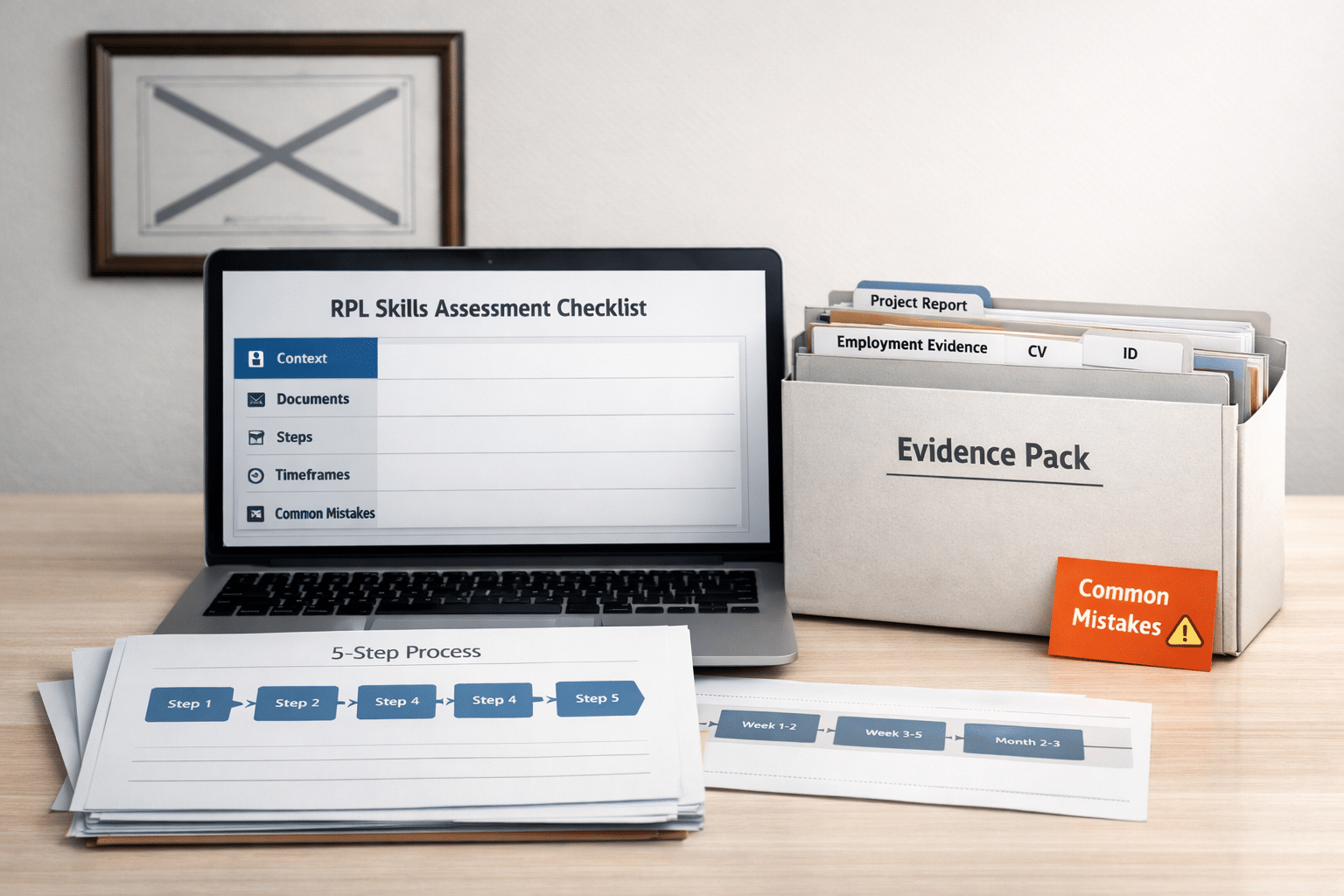
ACS assessments rely heavily on document consistency. Typical document types include:
Identity And Background
- Passport bio page
- Updated CV/resume aligned to ICT BA work
Employment Evidence
- Reference letters on company letterhead (or properly supported alternatives)
- Payslips, tax documents, bank statements, contracts (as applicable)
Project Support (Sanitised If Needed)
- Requirements artefacts (e.g., BRD/FRD summaries, user story lists, acceptance criteria)
- Process maps or user journeys (high-level)
- Meeting notes or workshop agendas (redacted)
- Test evidence (UAT sign-off extracts, defect summaries in a non-sensitive format)
- Screenshots that show system features you worked on (with sensitive data removed)
Important: Do not share confidential information. Instead, focus on structure and proof of involvement (redaction and anonymisation are common, when done carefully).
Timeframes: What To Expect (Without Overpromising)
Processing times can vary. At a high level, many applicants experience:
- Several weeks for an assessment decision (sometimes longer during busy periods)
- Additional time if you need to respond to requests for clarification or missing evidence
- Extra planning time before submission to ensure your documents align
Because this is a formal assessment, it’s wise to plan for a buffer rather than expecting a fast result.
For official information and migration pathways context, you can review the general front page of the Department of Home Affairs.
Common Mistakes That Trigger Delays Or Negative Outcomes
Most problems are avoidable. Here are frequent issues seen in ICT BA RPL-style submissions (in plain language):
1) Projects Described Too Generally
Statements like “I gathered requirements and worked with stakeholders” are not enough on their own. You need to explain the nature of the requirements and the system change—without turning it into a copy-paste template.
2) Over-Claiming Or Misalignment With Your Real Role
If you present yourself as the solution architect, developer, tester, and BA all at once, it can raise credibility questions. It’s better to be accurate and show strong BA depth.
3) Inconsistencies Across Documents
Dates that don’t match, job titles that change, or duties that conflict with references can cause issues.
4) Mixing Non-ICT Work Into The Core Narrative
Many ICT BAs do some admin or operations. That’s normal. But your RPL focus should remain ICT BA work that leads to technology outcomes.
5) Choosing Projects With Weak Evidence
If you can’t support a project with any form of artefact (even redacted), it becomes harder to demonstrate credibility.
6) Copying Generic Duty Lists
Using generic job descriptions with no project-specific context often reads as non-genuine. Keep it grounded in your real work.
How To Describe Projects Conceptually (Without Giving Ready-Made Wording)
A safe, effective approach is to describe each project around a few consistent concepts, without turning it into a template:
- Context: What the business needed and why
- Scope: What part of the system or process changed
- Your BA Activities: Elicitation, analysis, documentation, validation
- Stakeholders: Who you engaged with (business + technical)
- Deliverables: What outputs you created (high-level)
- Outcome: What changed after release (observable result)
The key is specificity of content (what was analysed) without providing “copy-ready” phrasing. Each applicant’s work environment, tools, and governance are different, and ACS expects that uniqueness to show.
RPL Project Examples ICT Business Analyst: What “Evidence” Looks Like In Practice
Evidence does not always mean full documents. It often means credible, consistent traces of work such as:
- A redacted requirement extract showing structure and versioning
- A process map that reflects a real workflow
- A user story list screenshot with IDs and statuses (no sensitive data)
- A UAT sign-off email snippet or sign-off page (sanitised)
- A change request summary with your name/role included (where possible)
If you cannot provide artefacts due to strict policies, focus on the strongest employment evidence and choose projects you can still describe clearly and consistently.
Where Study And Qualifications Fit Into The Bigger Picture
Many ICT Business Analysts come from non-ICT degrees (business, finance, engineering, science) and build ICT expertise on the job. If you also have Australian study plans or want to understand how study pathways connect to skilled migration, the government-backed information portal Study in Australia can be a helpful starting point.
Just remember: study decisions are personal and depend on your goals, budget, time, and migration pathway. For ACS RPL, the core issue is demonstrating ICT knowledge and professional competence through your evidence and project narratives.
How Many Projects Should You Use, And Which Ones Are Best?
Applicants often ask this because they have many projects. The practical answer is:
- Choose projects where your BA work is clear, central, and supportable
- Prefer projects that show a complete cycle (from discovery to delivery/validation)
- Avoid projects that are too vague, too sensitive, or mostly non-ICT
If you have one “perfect” project and one “okay” project, it may be better to replace the “okay” one with a more defensible choice—even if it seems smaller.
The best RPL project examples ICT Business Analyst are not always the biggest. They are the ones you can explain confidently with consistent evidence.
A Quick Reality Check: Each Case Is Unique
Two ICT Business Analysts can do the same job title in different organisations and have completely different responsibilities, tools, and governance. That’s why any guidance you read online must be treated as general.
If you want to reduce risk:
- Keep everything consistent across your CV, references, and project narratives
- Choose projects you can support
- Focus on BA work that clearly links business needs to ICT outcomes
- Avoid copy-paste language and overly generic descriptions
◆ Sydney-based Australian Pathways RPL and ACS writing team can best help with tailored RPL reports and documents, based on your background and the specific projects you can support.
FAQ: ACS RPL For ICT Business Analyst (ANZSCO 261111)
1) What counts as good RPL project examples ICT Business Analyst for ACS?
Projects that show you performing ICT Business Analysis activities (requirements, process mapping, stakeholder engagement, validation) that directly lead to system changes, integrations, workflows, data/reporting outcomes, or platform delivery.
2) Do my projects need to be large enterprise projects to be accepted?
No. ACS generally cares more about clarity, ICT relevance, and evidence than the “brand name” of the project. Smaller projects can be strong if your role and outputs are clear and credible.
3) Can I use Agile projects if I didn’t write formal BRDs?
Yes, Agile-style projects can still be explained credibly. The important point is that your narrative clearly shows how requirements were captured, refined, approved, and validated—using whatever artefacts your environment produced.
4) What is the biggest misconception about ACS RPL for ICT Business Analyst roles?
That you can simply match duty lists to ANZSCO wording. In practice, ACS wants a believable picture of your real work: what you analysed, how you worked with stakeholders and technical teams, and how your outputs contributed to an ICT solution.
5) If my documents are inconsistent, is that a serious problem?
It can be. Inconsistency (dates, titles, duties, project timelines) often triggers questions and delays. A consistent, well-aligned set of documents is one of the most important foundations of a successful submission.