
Last verified by Nima Parham — 27 October 2026.
Two buildings, one changing conversation about Australian art
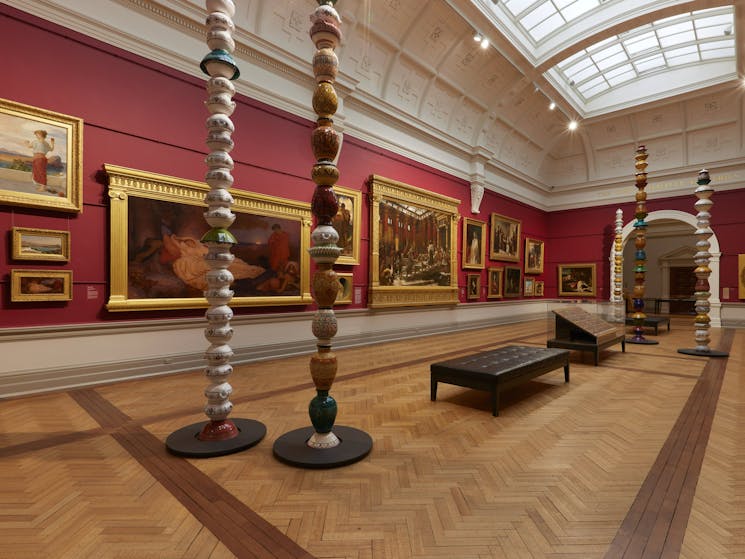
The Art Gallery of New South Wales is more than an obligatory stop on a Sydney itinerary. Its campus brings the historic south building, now known as Naala Nura, together with the newer north building, Naala Badu. The two buildings ask visitors to encounter Australian, international and First Nations art through quite different spaces. The question is not simply how long to spend, but how to look closely enough to notice the curatorial decisions behind a work. A useful first step is checking the gallery's current exhibitions programme, because temporary shows, access routes and ticketing change. This guide concentrates on making sense of a visit rather than presenting an unverified list of permanent highlights.
Begin with the names and what they represent
Naala Nura and Naala Badu are names connected with the gallery's relationship to place and First Nations language. They should not be treated as decorative rebranding. Entering the campus means entering a cultural institution located on Aboriginal Country, with collections that include works made across very different periods and systems of knowledge. Give yourself time to read the gallery's interpretation rather than assuming all objects can be understood through a single Western chronology. Some pieces invite close attention to Country, kinship, memory or political history. Others speak to migration, social change and the transformation of Sydney itself. A respectful visit means looking at each work on its own terms and following any rules about photography, handling or cultural warnings.
A first-hour route that leaves room to think
Begin in one building, not by trying to 'complete' both. Pick an exhibition or collection room and spend ten minutes with one work before reading every label. Notice scale, material, light, sound and the position of the viewer. Then read the artist and curator's words; compare their intended emphasis with your first impression. Only afterwards move to a second work that offers a contrast. This approach works even when you know very little about art history. If you are visiting with children, choose an area with space for observation and let them describe what they see without turning the room into a quiz. Plan any separately ticketed event before your visit. The gallery's exhibition listings provide dates and costs for individual shows, while the broader collection experience may be free.
First Nations art is not a single category
First Nations Australian art includes many communities, regions, media and contemporary practices. It should not be confined in the visitor's imagination to one room or one historical period. A painting, moving-image work or installation might address Country, language, urban life, ancestral relationships or the ongoing impact of colonisation. Avoid asking whether a work is 'traditional' as though contemporary innovation made it less authentic. Instead ask what information the artist wishes to share and which cultural permissions shape what can be shown. Gallery labels and artists' own statements provide a stronger introduction than generic internet summaries. The Art Gallery's programme is useful for identifying whose voice is being presented in any particular exhibition.
Architecture changes the visitor's pace
The campus itself is part of the experience. Different room proportions, outdoor connections, stairways and transitions between galleries influence what you see and when. One person may enjoy moving quickly between installations; another will need lifts, seating and quieter circulation routes. Check current accessibility arrangements before travelling, because a building can be open while individual lifts, galleries or entrances are temporarily affected. The correct plan for someone using a mobility aid may differ from the route suggested by a tourist map. A companion with sensory sensitivities may prefer fewer rooms and a quieter time of day. Architectural photographs rarely show practical details such as a closed lift or a queue at an exhibition entrance, so the institution's visitor information should win over social media.
What's on now, not what an old article promised
Exhibitions come and go. Around late October 2026, the gallery's member-exhibition listing identifies the show *And Still I Rise*, presented in Naala Nura until January 2027, and *Proximate Cosmologies* in Naala Badu on a similar schedule. These examples demonstrate why it is risky to build an evergreen article around a temporary programme. Check the current member and exhibition notices and then the venue's ticketing details. Even an ongoing collection display can rotate objects for conservation or lending. This article deliberately does not promise a particular artwork will be on display every day.
Making the visit useful for students and researchers
A student of art or design can treat a gallery visit as a method exercise. Start with a defined question such as how an institution represents a place, how a material is used across cultures, or how an exhibition explains the relation between art and public debate. Take notes on the claims made by the label and the evidence visible in the work. Record artist name, title, year and room information where photography is permitted. If you later write about a work, use the gallery's own catalogue or the artist's authorised publication to verify details. Never assume an image found online is free for commercial reuse. A scholarly visit is not measured by the number of rooms seen; it is measured by what you can describe accurately afterwards.
Free entry does not mean every ticket is free
Many collection spaces can be visited without purchasing a standard admission ticket. Special exhibitions, performances, workshops and some public programmes may require a paid booking. The key distinction is between access to the general gallery and entry to a specific event. Before you go, check whether an advertised ticket covers one programme or the entire day, and whether a concession or companion arrangement applies. There is little benefit in buying a third-party 'museum pass' without confirming it adds anything to a free collection visit. Equally, a free entry policy does not guarantee that a sold-out paid exhibition can be entered without reservations. The gallery's own booking channel should answer those questions.
A Sydney afternoon that is not only about art
Because the gallery sits near the city's central public spaces, a visit can be paired with a slow walk, a café break or a discussion of the city outside its doors. That pairing can deepen the experience rather than distract from it: art about land, politics, migration or the urban environment may change what you notice in the streets afterwards. Keep the itinerary flexible enough to linger in a room that surprises you. If you have only ninety minutes, one carefully chosen exhibition and a relaxed departure are better than a rushed attempt to 'see it all'.
What an up-to-date guide should actually promise
The Art Gallery of New South Wales deserves a visit for the range of questions its collections allow, not because of a fixed checklist. Verify exhibitions shortly before departure, distinguish ticketed shows from the collection, respect Indigenous cultural protocols and plan for accessibility. Leave with three observations you can explain instead of thirty photographs you cannot identify.
When contemporary art changes the public conversation
A gallery can help frame debates that are easy to overlook in a conventional city guide. Artworks may examine belonging, cultural continuity, the climate, work and the power structures that determine whose stories are remembered. Do not presume that a temporary exhibition offers a single agreed position on those questions. Artists may deliberately use ambiguity, humour or uncomfortable contradictions. Read curatorial context, but leave room for independent interpretation. When an artwork refers to a community or a political history unfamiliar to you, follow up with a credible publication rather than settling for an improvised answer. The visit becomes an invitation to learn more, not a substitute for scholarship.
A sensible approach to photographs and credits
If photography is allowed, record the artist's name and the work's title together with the image. For a personal study diary this helps prevent inaccurate captions later. For website publication, seek the necessary copyright and image permissions and respect any cultural restrictions. A photograph you take inside a gallery is not automatically unrestricted for commercial use. The institution's current programme can help identify the exhibition and lead to official image and rights information. The same principle applies to social posts: credit is necessary but may not replace permission.
The question worth taking home
Ask not only which painting you liked but how the institution presented its creator, context and audience. That question turns an ordinary cultural stop into a lasting encounter with different ways of seeing Australia.