
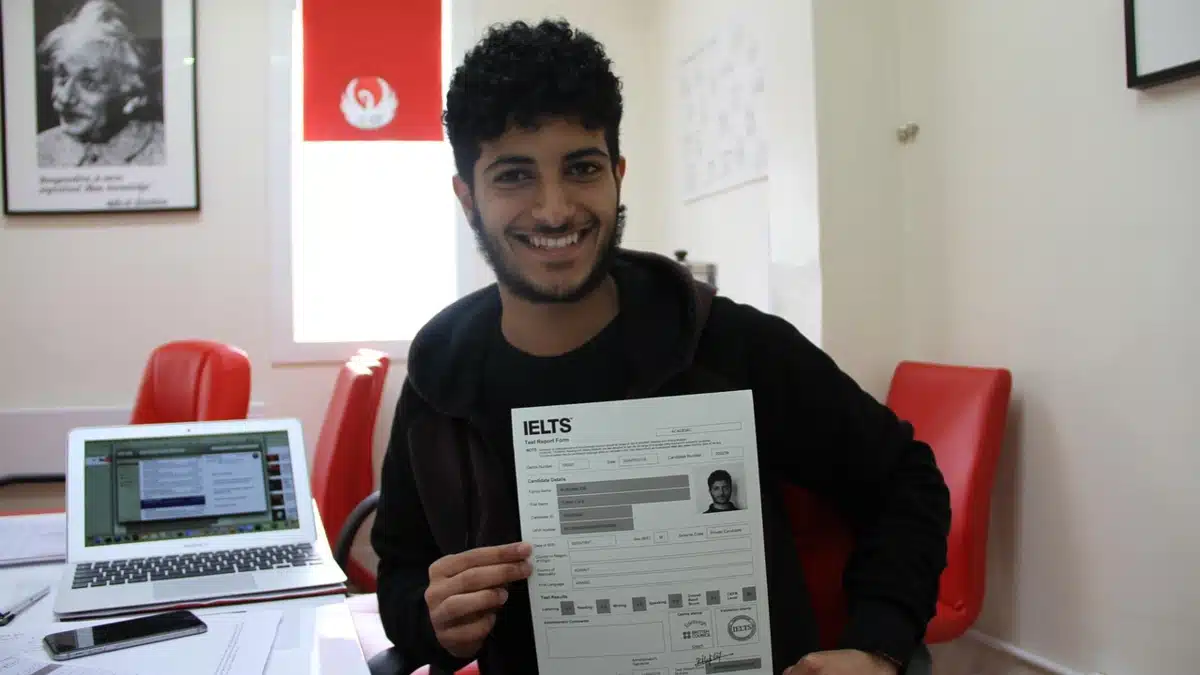

ielts score for 189 visa applicants is best understood as three thresholds, not one overall band: IELTS 6 in each skill meets Competent English, IELTS 7 in each gives 10 points, and IELTS 8 in each gives 20 points.
The minimum English level for the Skilled Independent visa (subclass 189) Points-tested stream is Competent English at the time of invitation. For IELTS Academic or IELTS General Training, that means at least 6.0 in listening, reading, writing and speaking. Competent English meets the English eligibility floor but does not itself add English-language points. Proficient English—IELTS 7.0 in every skill—adds 10 points. Superior English—IELTS 8.0 in every skill—adds 20 points. The current Home Affairs subclass 189 Points-tested stream also requires at least 65 total points to be eligible for invitation, while making clear that reaching 65 does not guarantee an invitation.
Competent English
Minimum English level for subclass 189 eligibility; 0 English points.
Proficient English
10 points under the General Skilled Migration points test.
Superior English
20 points under the General Skilled Migration points test.
How IELTS Converts Into Subclass 189 Points
The legal distinction between Competent, Proficient and Superior English matters because they do different jobs in a subclass 189 application. The current Migration Regulations 1994 require the relevant applicant to have Competent English for the Points-tested stream, while Schedule 6D awards 10 points for Proficient English and 20 points for Superior English. There is no separate Schedule 6D English-points item for Competent English.
| English level | IELTS requirement | English points | Practical meaning |
|---|---|---|---|
| Competent | 6.0 in each skill | 0 | Meets the English threshold |
| Proficient | 7.0 in each skill | 10 | Raises the GSM points score |
| Superior | 8.0 in each skill | 20 | Maximum English points |
The key word is each. The ielts score for 189 visa calculation is not based on your IELTS overall band. If your scores are Listening 8.5, Reading 8.5, Writing 7.5 and Speaking 8.0, you do not have Superior English because Writing is below 8.0. Those scores satisfy the IELTS threshold for Proficient English, so the English component contributes 10 points rather than 20.
What Happens If One IELTS Skill Misses the Target?
A single lower component can change both eligibility and points. Suppose an applicant receives Listening 8.0, Reading 8.0, Writing 7.5 and Speaking 8.0. The result may look close to four 8s, but migration thresholds are not rounded across components. Because Writing is below 8.0, the applicant does not meet Superior English. If every component is at least 7.0, the result instead meets Proficient English and is worth 10 English points.
The consequences are larger at the lower threshold. If an applicant has 7.0 in Listening, Reading and Speaking but 5.5 in Writing, that test result does not establish Competent English through IELTS. A high overall band cannot repair a component below the required minimum.
This is why the ielts score for 189 visa should be tracked as four numbers rather than as a single average. When planning a retest, identify the threshold that changes the migration outcome—6, 7 or 8 in every component—rather than simply trying to increase the headline overall score.
Home Affairs states on its current Competent, Proficient and Superior English pages that IELTS results including One Skill Retake (OSR) are accepted for eligible visas and directs applicants to check the relevant visa requirements. Because eligibility and evidentiary circumstances matter, an applicant relying on OSR should verify that the result is acceptable for their particular visa pathway and timing before treating the retake as resolved.
Minimum IELTS Versus a Competitive Points Position
IELTS 6.0 in every skill can be sufficient for the English requirement, but that is different from saying it is the best score for a competitive Expression of Interest. Home Affairs currently states that subclass 189, 190 and 491 candidates need to meet or exceed the 65-point threshold. It also explicitly warns that meeting the threshold does not guarantee an invitation.
English is therefore both an eligibility issue and a points-planning lever. Moving from Competent to Proficient English adds 10 points. Moving from Proficient to Superior adds another 10. For an applicant whose other factors leave them near the threshold, that difference can transform the arithmetic of the EOI.
55 → 65 → 75
Assume 55 points from non-English factors. Competent English leaves the score at 55; Proficient English takes it to 65; Superior English takes it to 75.
65 → 75 → 85
Assume 65 points from non-English factors. Competent English leaves 65; Proficient raises the total to 75; Superior raises it to 85.
These examples illustrate points arithmetic only. They are not predictions of invitation outcomes. Invitation competitiveness can depend on factors beyond the statutory pass mark, including the points claimed in the EOI and the operation of SkillSelect invitations at the relevant time.
For this reason, the best ielts score for 189 visa planning target is not automatically 8.0 for everybody. An applicant should first calculate the complete points position. If 10 extra points materially change the strategy, IELTS 7 in each may be a meaningful target; if a further 10 points are important, IELTS 8 in each becomes strategically significant. Use the official Home Affairs points calculator for current categories rather than relying on an old spreadsheet or forum post. Applicants budgeting the wider process can also review the Australia Pathways guide to subclass 189 visa costs and application budgeting.
IELTS Academic or IELTS General Training?
For the Australian migration English levels relevant here, Home Affairs accepts both IELTS Academic and IELTS General Training. The IELTS thresholds are identical: 6 in each component for Competent English, 7 in each for Proficient English and 8 in each for Superior English.
That does not mean the two tests are interchangeable for every purpose outside migration. A skills-assessing authority, professional regulator, university or employer may impose its own English evidence standard. If an applicant needs the same test result for both migration and professional registration, the requirements of both systems should be checked before choosing the test type.
Australia changed its approved English-test framework on 7 August 2025. That reform altered the range of approved tests and several score conversions, although the IELTS 6/7/8 component thresholds relevant to Competent, Proficient and Superior English remained unchanged. If you are comparing alternatives, see the current Australia Pathways analysis of TOEFL versus IELTS for Australian permanent residence and the guide to Cambridge C1 Advanced scores for subclass 189.
The Three-Year Rule: Why Your Invitation Date Matters
For an invited skilled-migration applicant, the age of the test result matters as well as the score. Regulation 1.15C provides that where a person was invited—or their spouse or de facto partner was invited—to apply, the test establishing Competent English must have been conducted in the three years immediately before the invitation date. Regulations 1.15D and 1.15EA apply equivalent three-year timing logic to Proficient and Superior English.
That timing point is central to ielts score for 189 visa strategy because SkillSelect is an invitation-based process. A result may have been valid when an EOI was first created but become too old before a later invitation. Conversely, Home Affairs permits applicants to update an EOI before an invitation, so a stronger or newer qualifying English result should be reflected accurately before the invitation is issued.
Choose the Required English Level
Determine whether you only need Competent English or whether 10 or 20 English points are important to the points strategy.
Check Every Component
Verify listening, reading, writing and speaking individually. Do not make the assessment from the overall band.
Check the Test Date
Make sure the evidence satisfies the relevant three-year timing rule when the invitation is issued.
Update SkillSelect Before Invitation
Home Affairs says an EOI can be updated before invitation. Enter a new qualifying result accurately rather than relying on outdated EOI information.
The official SkillSelect EOI guidance also says applicants should include English-test and skills-assessment results as they receive them. Once invited, the applicant normally has 60 days from the invitation date to submit the visa application.
Can a Passport Replace IELTS?
For Competent English, testing is not always necessary. Home Affairs states that a person can establish Competent English by being a citizen of, and holding a valid passport issued by, Canada, New Zealand, the Republic of Ireland, the United Kingdom or the United States. The Competent English guidance lists these passport countries explicitly.
That passport route should not be confused with the additional English points. The General Skilled Migration points test awards 10 points for Proficient English and 20 for Superior English, both of which are defined through qualifying language-test performance. A passport that establishes Competent English does not by itself establish those higher tested levels.
Partner English Can Also Affect the Points Calculation
A partner’s English can matter independently of the primary applicant’s English points. Under Schedule 6D of the Migration Regulations, a spouse or de facto partner who is an applicant for the same subclass, is not an Australian citizen or permanent resident, and has Competent English at the relevant invitation time can support a 5-point partner qualification.
The partner category can be worth 10 points where the additional statutory conditions are met, including the partner being under 45 when the primary applicant is invited, having an eligible nominated skilled occupation, holding the required suitable skills assessment and having Competent English. Separately, an applicant with no spouse or de facto partner, or whose partner is an Australian citizen or permanent resident, falls within another 10-point partner category.
Your own ielts score for 189 visa eligibility still has to satisfy the primary applicant’s requirements; a partner’s qualifying English does not replace the primary applicant’s Competent English obligation. Where the occupation involves an ICT skills assessment, Australia Pathways also provides a separate explanation of RPL for ACS skills assessment, which should be treated as a distinct requirement from migration English.
Common IELTS Mistakes in a Subclass 189 EOI
- Using the overall band. Migration English levels depend on the minimum score in each required component, not the overall IELTS result.
- Assuming IELTS 6 gives English points. Six in every component establishes the IELTS test threshold for Competent English, but Schedule 6D does not award English points for that level.
- Calling IELTS 7 the minimum. Seven in each component is the Proficient English level worth 10 points; it is not the basic IELTS threshold for Competent English.
- Treating 65 points as an invitation guarantee. Home Affairs describes 65 as the threshold that must be met or exceeded and expressly states that meeting it does not guarantee an invitation.
- Ignoring the test date. For invited applicants, the relevant English definitions contain a three-year rule tied to the invitation date.
- Booking an at-home test. Home Affairs does not accept fully online or remote-proctored English tests for Australian visa purposes, including IELTS Online.
- Mixing migration and professional English rules. A migration-valid IELTS result does not automatically satisfy a separate registration, licensing or skills-assessment authority.
A disciplined ielts score for 189 visa plan therefore uses a simple hierarchy: first establish whether the English eligibility requirement is met, then calculate whether 10 or 20 English points are strategically useful, then verify the evidence date and ensure the EOI accurately reflects the result. This prevents an attractive overall IELTS band from obscuring the component score that actually controls the migration outcome.
Related Australia Pathways Guides
Bottom Line
For a primary applicant using IELTS, the ielts score for 189 visa thresholds are clear: 6.0 in every component meets the IELTS standard for Competent English, 7.0 in every component establishes Proficient English and contributes 10 points, and 8.0 in every component establishes Superior English and contributes 20 points. Both IELTS Academic and General Training can be used for these migration English levels. The overall IELTS band is not a substitute for the required score in each skill.
The more important strategic question is what those English points do to the applicant’s complete subclass 189 points position. The statutory threshold is 65, but 65 is not an invitation forecast. Before relying on an English result, check all four component scores, the test date, the current points calculation, the skills assessment and the evidence entered in SkillSelect. English should be planned as one component of the full skilled-migration case rather than treated as a standalone visa guarantee.
Sources and Verification
- Australian Department of Home Affairs — Skilled Independent visa (subclass 189), Points-tested stream.
- Australian Department of Home Affairs — Competent English.
- Federal Register of Legislation — Migration (Specification of Language Tests, Test Scores and Passports) Instrument 2025.
- Federal Register of Legislation — Migration Regulations 1994, current compilation.
- Federal Register of Legislation — Migration points-test pass and pool marks instrument LIN 19/210.
- Australian Department of Home Affairs — SkillSelect Expression of Interest guidance.
Photo credit: annemcdon — Source: Pixabay