
Last verified by Nima Parham — 27 October 2026.
Information checked 26 October 2026. Prices, animal encounters and transport schedules can change without notice.
For decades, the usual description of Lone Pine Koala Sanctuary in Brisbane ended with a promise: visit, cuddle a koala and take home a photograph. That advice is now obsolete. Lone Pine stopped offering koala holding on 1 July 2024. The sanctuary’s own written statement explains the change as a move toward closer observation and longer, less intrusive encounters. Any current travel guide that still guarantees a koala cuddle is misleading visitors.
What remains is a worthwhile wildlife destination on the Brisbane River at Fig Tree Pocket. The question is not whether Lone Pine still has koalas: of course it does. It is whether the experience you want is consistent with today’s visitor programme—and whether a separate animal encounter offers value beyond the standard ticket.
First, understand what your entry ticket buys
The current Lone Pine ticket page lists general admission at AUD 63 for adults, AUD 45 for children aged 3–13, and AUD 193 for a family ticket covering two adults and up to three children. Those are operator-published prices at the time of review; they are not fixed promises for a later visit. Age definitions and discounts matter, so use the live booking basket to confirm your exact party.
The ticket includes access to many ordinary sanctuary experiences and a schedule of keeper talks and presentations. Lone Pine currently identifies free-range kangaroo feeding, a raptor show, sheepdog demonstrations and talks involving koalas and other species among experiences included with admission. Activities are subject to the day’s operating schedule and animal-welfare needs. Read the official included-with-entry list rather than an old third-party itinerary.
You can have a full visit without buying any premium koala encounter. This is especially true for families with younger children: the value may come from watching kangaroos, seeing birds in flight and listening to a keeper explain how Australian species live, eat and respond to threats.
The new koala experiences: choose your distance
Lone Pine now markets several paid options rather than one universal cuddle. The official koala-experiences page lists a Koala Moments experience from AUD 35 per person, Koala Close Up from AUD 39, and a Koala Discovery Tour at AUD 150. Prices and time slots change, so verify them in the booking process.
Koala Moments is designed as a relatively short encounter. Koala Close Up provides more time around a koala with a carer, including interpretation of behaviour and care. The Discovery Tour is positioned as a behind-the-scenes experience for visitors who want more context. None should be interpreted as permission to handle animals outside the sanctuary’s current protocols.
Lone Pine states explicitly on that page that koala holding is unavailable. This is not a temporary closure to be solved by asking staff on arrival; it is an announced policy. The change was also documented independently by ABC News in July 2024, which reported the sanctuary’s rationale and the replacement close-up model.
For adults who simply want a good view of a koala, the main sanctuary experience may be sufficient. For someone interested in animal care or conservation, a keeper-led add-on may justify its price. For a child hoping to hold a koala, explain the change before visiting rather than at the entrance. Setting honest expectations improves the day.
Koalas are only part of the story
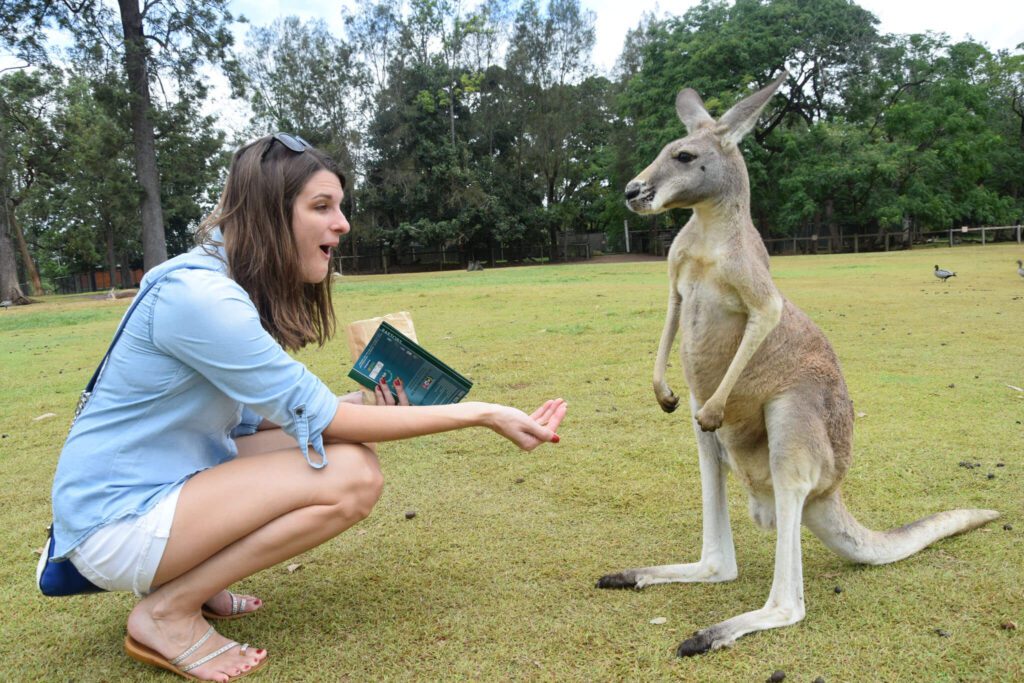
Lone Pine’s wider appeal is the chance to encounter several Australian species in one landscape. Kangaroos are one of the most appealing contrasts to observing a resting koala: visitors may see them moving, grazing or interacting at a more active pace. The sanctuary’s ticket page identifies its free-range kangaroo experience among admission inclusions, subject to on-site rules.
A bird presentation can be particularly rewarding for children and adults who think wildlife parks consist only of static enclosures. Seeing birds’ movement and learning the reasons behind it offers a glimpse of how different animals occupy their environments. The daily programme may also include crocodile, dingo or other animal talks; check the current activity schedule before arranging an hour-by-hour plan.
Never promise that every animal will be visible or active. A koala may sleep; a bird may not participate in a presentation; an experience may be adjusted for welfare, staffing or weather. Good wildlife tourism works around the animals, not the other way around.
Arriving from Brisbane: car, bus or river journey?
The sanctuary is at 708 Jesmond Road, Fig Tree Pocket, approximately 12 kilometres from Brisbane’s CBD according to the official Plan Your Journey guide. Lone Pine lists self-driving, public bus and a scenic river cruise among possible transport options. Route availability, frequency and the total door-to-door journey can be different, so check real schedules for your date.
Driving offers flexibility, particularly for families with children and visitors bringing substantial equipment. The sanctuary reports free on-site parking in its visitor FAQs, including some accessible spaces. Parking availability may still vary with demand. A bus may be preferable if you do not want to drive in an unfamiliar city; plan the last stop and walking route rather than measuring only the straight-line distance from the CBD.
A river cruise can make the journey part of the experience, but it should not be treated as a default cheap transfer. Check whether your chosen operator’s ticket includes sanctuary admission, whether times match your desired length of visit and what the return arrangements are. Combining ticket and transport products can be convenient, but compare the total cost rather than assuming a bundle is always cheaper.
A family itinerary that works without rushing
For a group of two adults and school-age children, a practical visit begins by checking the day’s talks and selecting one must-see presentation. Arrive early enough to orient yourselves, then spend some time with the koala habitats while the children are attentive. Use a keeper session as a focal point rather than trying to dash between every scheduled event.
After a break, explore the kangaroo area and another wildlife precinct. If a premium encounter has been booked, leave a comfortable buffer beforehand; arriving late can affect access. End with an area the group wants to revisit. A pleasant wildlife visit should allow some unplanned observation, not become a compulsory checklist.
The sanctuary opens daily from 9 am to 5 pm, with last entry at 4 pm, according to its present visitor information. Last entry is not a recommended arrival time for someone hoping to enjoy the full programme. Allow several hours, especially when travelling with children.
Access, care and the meaning of an ethical encounter
The sanctuary sits on naturally hilly ground, and the accessibility FAQs note alternative routes for visitors with limited mobility. Contact the venue in advance if you need an accessible path to a particular experience. A transport option that brings you to the entrance does not guarantee that every route inside the venue will suit every visitor.
Animal welfare is not a checkbox that visitors can independently verify by looking at an enclosure for five minutes. It is reasonable, however, to ask how encounters are supervised, whether animals can withdraw, what interpretive value a visit offers and how the sanctuary explains conservation. Lone Pine says that AUD 1 from each koala-experience ticket is donated to Australian Wildlife Conservancy. That is a specific published claim; it should not be exaggerated into the idea that every dollar of ticket revenue funds conservation projects.
The koala-holding change gives this discussion substance. Instead of framing the policy as a lost photo opportunity, the sanctuary invites visitors to observe animals in their own space. The experience is still commercial tourism, but it illustrates how the terms of interaction can change over time.
Is Lone Pine worth the admission price?
It depends on what you value. If your priority is a single photograph holding a koala, do not buy a ticket expecting to get one. If you want an approachable introduction to Australian wildlife, interpretive talks and enough variety for a relaxed family outing, Lone Pine remains an attractive Brisbane option. A premium experience may appeal to a specialist visitor but is unnecessary for everyone.
Before paying, confirm the current ticket prices, the koala policy and paid encounter options and transport and operating details. Then give the animals time. Today’s Lone Pine experience is better understood as observing and learning rather than collecting a cuddle.