

Best migration agent ICT Business Analyst searches usually start when you realise two things at once: Australia’s skilled migration system is opportunity-rich, and the documentation side can feel surprisingly strict.
If you are an ICT Business Analyst (ANZSCO 261111) and you are unsure how your degree, work history, and evidence will be assessed, you are not alone. In many cases, the turning point is understanding how the ACS skills assessment works, and where RPL fits when your qualifications do not perfectly match ICT requirements.
In this guide, you will learn what an ICT Business Analyst is in Australian terms, how ACS assessment generally works, what RPL means in the ACS context, typical document types and timeframes, and the most common mistakes that delay outcomes. You will also see how to think clearly about choosing the Best migration agent ICT Business Analyst pathway without relying on guesswork.
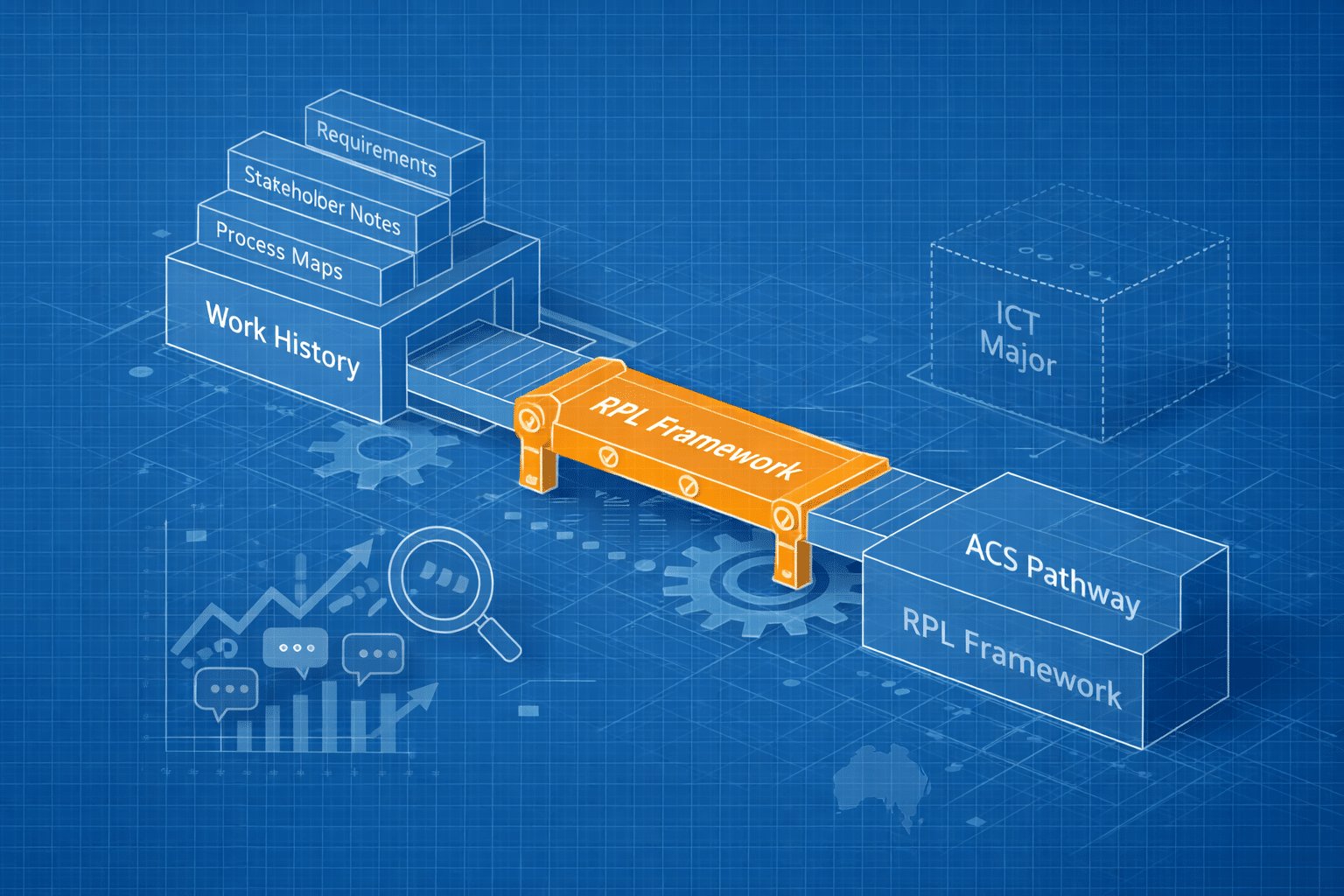
In the first step, it helps to understand the concept of RPL for ACS skills assessment and why it exists for experienced professionals who have strong ICT work history but non-ICT or insufficient ICT formal study.
◆ The Sydney-based Australian Pathways RPL and ACS writing team can best help with tailored RPL reports and documents when your background needs careful alignment to ACS expectations.
Why “Best migration agent ICT Business Analyst” Is A Different Search
Many people assume an ICT Business Analyst profile is “simple” because it sounds non-technical. But in Australia’s skills assessment context, the role sits inside the ICT occupations group, and the assessment still focuses on ICT knowledge, ICT project exposure, and evidence that your experience is genuinely at the required professional level.
That is why the Best migration agent ICT Business Analyst search is not only about visas. It is often about sequencing:
- Skills Assessment Strategy First (Especially ACS)
- Evidence Preparation Second
- Visa Pathway Planning Third
- Timing And Risk Control Throughout
A good strategy avoids rushing into the wrong evidence pack, or choosing a visa path before the assessment reality is clear.
Who Is An ICT Business Analyst (ANZSCO 261111)?
An ICT Business Analyst (ANZSCO 261111) is generally a professional who helps organisations improve processes, systems, and outcomes by translating business needs into technology requirements.
In everyday terms, an ICT Business Analyst typically:
- Works With Stakeholders To Gather Requirements
- Analyses Current Business Processes And Pain Points
- Produces Functional Requirements And Specifications
- Supports Solution Design By Clarifying Business Rules
- Helps With Testing, UAT, Implementation, And Change Support
- Coordinates Between Business Teams And Technical Teams
This is not the same as a “general business analyst” in every country. For skilled migration purposes, the expectation is that your work links clearly to ICT systems, data flows, platforms, or technology-enabled processes.
Common domains include banking, insurance, healthcare, telecom, logistics, retail, government services, and enterprise platforms like ERP/CRM.
Where ACS Fits Into The Journey
For ICT Business Analyst 261111, the Australian Computer Society (ACS) is the primary assessing authority for most skilled migration pathways in ICT occupations.
ACS does not approve visas. It issues a skills assessment outcome that is often required before you can proceed meaningfully with skilled migration planning.
If you want to read the official overview directly, start at the front page of the Australian Computer Society website and navigate to their skills assessment area from there.
A key point: ACS is evidence-driven. They want your documents to demonstrate both:
- Your ICT Knowledge Base (From Qualifications Or RPL), And
- Your Relevant Employment (Tasks, Level, Dates, And Consistency)
This is where many applicants feel stuck, especially if their degree is non-ICT, partially ICT, or from a system where transcripts and course descriptions are not detailed.
What RPL Means In The ACS Context
RPL stands for Recognition of Prior Learning. In the ACS skills assessment context, RPL is a pathway designed for applicants who do not have a suitable ICT qualification, but who do have substantial, relevant ICT professional work experience.
RPL is not a “shortcut.” It is a structured way to show that your skills were built through work-based learning, projects, and professional practice over time.
In high-level terms, ACS uses RPL to answer one central question:
Can this applicant demonstrate ICT knowledge comparable to what a formal ICT qualification would provide, supported by credible evidence?
For ICT Business Analyst candidates, RPL commonly becomes relevant when:
- Your Degree Is In A Non-ICT Field (Business, Management, Engineering In Some Cases, Economics, Etc.)
- Your ICT Study Is Insufficient Or Not Closely Aligned
- Your Strongest Evidence Is Professional Experience Rather Than Formal Coursework
Because RPL documentation is personal and evidence-dependent, it is important to keep expectations realistic. Two candidates with the same job title can have very different outcomes depending on the nature of their projects and the strength of their documentation.
High-Level Steps Of ACS Skills Assessment (Especially For Non-ICT Degrees)
If you are searching Best migration agent ICT Business Analyst, you likely want a clear roadmap. Here is a high-level view that stays conceptual while still being practical.
1) Confirm Your Occupation And Role Fit
Before documents, confirm you genuinely fit ICT Business Analyst (261111) rather than a different ANZSCO. Many delays start here.
Ask yourself:
- Were most of your responsibilities tied to ICT systems and digital processes?
- Did you work with technical teams and system constraints?
- Were you producing ICT-focused requirements and solution support outputs?
If your work was mostly policy, operations, or pure finance with limited ICT interface, you may need a careful role fit review.
2) Understand The Assessment Path: Qualification-Based Or RPL-Based
Broadly, applicants fall into one of these buckets:
- ICT Qualification Clearly Suitable (Simpler evidence path)
- ICT Qualification Partially Suitable (More careful mapping needed)
- Non-ICT Or Insufficient ICT Qualification (RPL may be relevant)
This is one reason the Best migration agent ICT Business Analyst question matters: the same person can waste months if they prepare the wrong evidence set for their actual bucket.
3) Prepare Employment Evidence In A Consistent Way
ACS typically expects documents that support:
- Employment Dates
- Position Titles
- Full-Time / Part-Time Nature
- Employer Authenticity
- Consistent Duties Matching The Claimed Occupation
- Evidence That Work Was At A Skilled, Professional Level
Even when your experience is strong, inconsistencies (different titles across letters, missing dates, unclear hours) can create avoidable issues.
4) Prepare RPL Evidence (If Needed) Without Treating It Like A Template Exercise
If you need RPL, the concept is to demonstrate ICT knowledge gained through practice. The mistake is to treat it as a generic writing task.
RPL documentation must remain:
- Personal To Your Projects
- Aligned With Your Actual Work
- Supported By Evidence Where Possible
- Clear And Professionally Presented
Because every case is unique, it is risky to copy examples from others. It can also create inconsistencies that an assessor may notice.
5) Submit, Monitor, And Respond Carefully If Clarifications Are Needed
Once submitted, timeframes vary. If the assessing authority requests clarification, it is crucial to respond accurately and consistently with your original evidence.
Typical Document Types For ICT Business Analyst Applicants
Below is a high-level list of documents commonly used in ACS skills assessment preparation. This is not a checklist that fits every case, but it reflects what many applicants rely on.
Identity And Background Documents
- Passport Bio Page
- Name Change Evidence (If Applicable)
- Updated CV / Resume With Clear Timeline
Qualification Evidence (If You Have It)
- Degree Certificate
- Academic Transcript
- Course Syllabus Or Subject Descriptions (Where Available)
Employment Evidence (Core Area)
- Employer Reference Letters With Role, Dates, Duties, Hours
- Employment Contracts Or Appointment Letters
- Payslips Or Tax Documents (As Supporting Evidence)
- Organisational Charts Or Reporting Lines (If Relevant)
- Evidence Of Professional Outputs (When Safe And Appropriate)
For ICT Business Analysts, “evidence of outputs” may include redacted artefacts like requirements documents, process maps, user stories, test plans, change requests, stakeholder reports, or analysis deliverables. The key is to keep it ethical and compliant with confidentiality obligations.
Typical Timeframes (General Only)
Timeframes can change, and they vary by case complexity, document readiness, and workload at the assessing authority. Still, it helps to think in ranges and plan your life around them.
At a general level, you can expect:
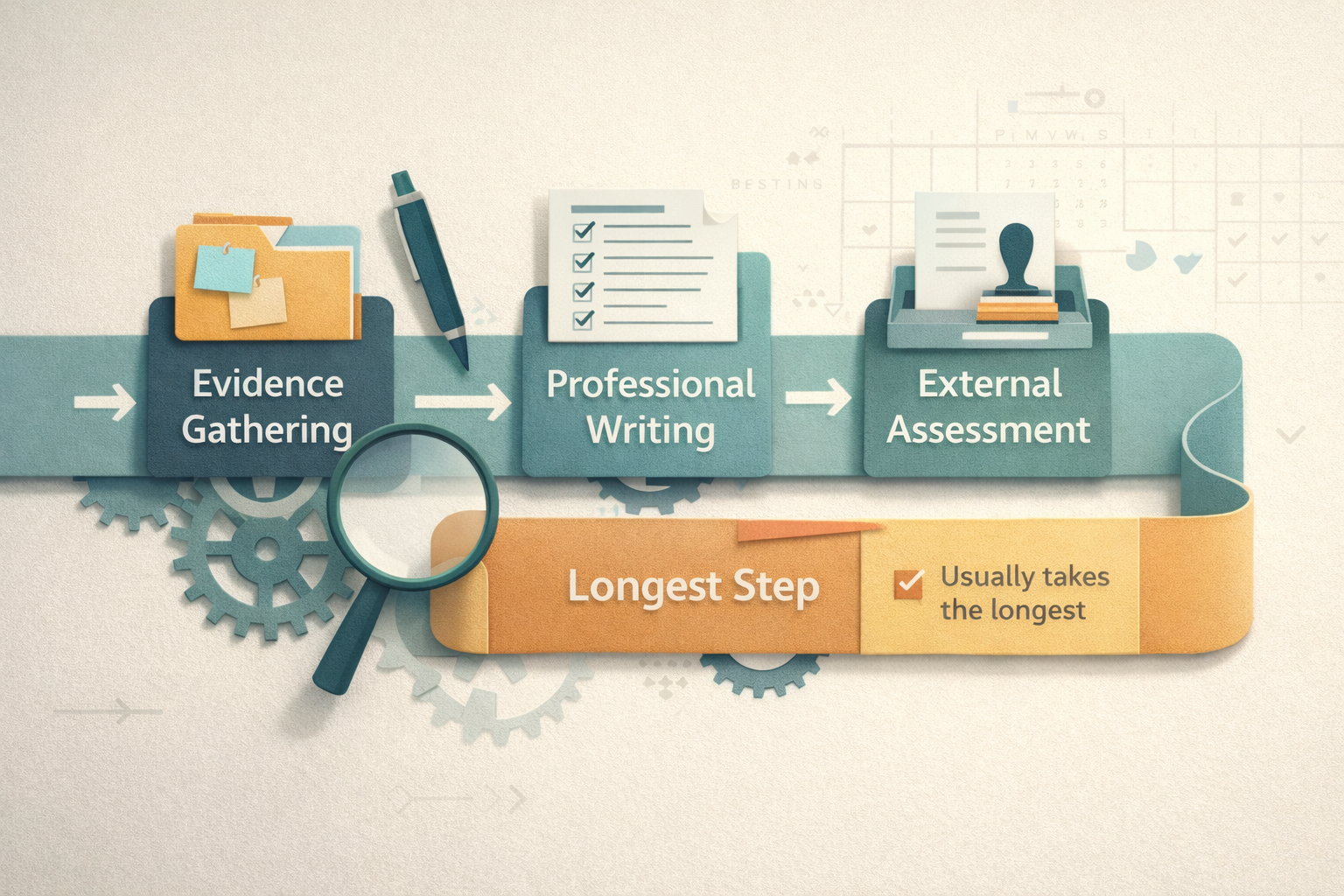
- Document Collection And Preparation: Often Several Weeks
- Review And Consistency Checks: Often 1–3 Weeks
- Lodgement And Assessment Time: Varies By Period And Case
- Clarification Requests (If Any): Adds Extra Time
The most common time delay is not the authority’s processing time. It is usually the applicant’s preparation time, rework time after errors, or chasing employers for correct letters.
Common Mistakes That Hurt ICT Business Analyst Applications
If you want the Best migration agent ICT Business Analyst outcome, avoid the mistakes that repeatedly cause refusals or delays.
Mistake 1: Confusing Business Analyst With ICT Business Analyst
If your duties are described like a pure business role, the ICT alignment can look weak.
Examples of weak framing (conceptually):
- Describing generic operations improvements without system context
- Ignoring the technology platform you worked with
- Not showing how requirements linked to ICT implementation
Mistake 2: Over-Claiming Duties That You Did Not Actually Do
Over-claiming creates contradictions that appear in:
- Interviews
- Reference Letters
- Project Artefacts
- LinkedIn Profiles Or Internal Records
A safer approach is accuracy. Strong documentation beats exaggerated claims.
Mistake 3: Inconsistent Dates, Titles, Or Hours
Small inconsistencies can become big problems.
Common causes include:
- Different job titles between HR contract and manager letter
- Missing months or unclear start/end dates
- Not clarifying part-time or contract work
- Inflating hours without supporting evidence
Mistake 4: Treating RPL As A Generic Writing Assignment
RPL is evaluated for authenticity, relevance, and clarity. Generic content, copied structure, or “perfect-sounding” stories can backfire.
Keep it:
- Realistic
- Specific To Your Context
- Internally Consistent
- Focused On ICT Knowledge And Practice
Mistake 5: Using Buzzwords Instead Of Demonstrable Work
Terms like “Agile,” “Digital Transformation,” or “Stakeholder Management” are not evidence by themselves.
Better is to show:
- What You Delivered
- Why It Was Needed
- How It Interacted With ICT Systems
- How Success Was Measured Or Validated
Best migration agent ICT Business Analyst: How To Choose Support Wisely
Many people think the Best migration agent ICT Business Analyst decision is only about choosing a person or a brand. In reality, you are choosing a process and quality control approach.
Here are practical, neutral criteria to evaluate support.
Look For Process Clarity
A reliable professional should explain:
- What They Will Review
- What They Will Not Write For You
- How They Identify Gaps
- How They Reduce Inconsistency Risk
- How They Handle Confidential Information
Check For Role-Specific Understanding
For ICT Business Analyst, role fit is everything.
Ask whether they understand:
- Requirements Elicitation And Documentation
- UAT And Test Support
- System Integration Constraints
- Data And Reporting Requirements
- Change Management In ICT Context
Expect Evidence Discipline
Good support focuses on evidence, not storytelling.
You want help that identifies:
- Weak Letters
- Missing Dates Or Hours
- Overlapping Employment Claims
- Mismatched Duties
- Unclear Project Context
Avoid Anyone Promising “Guaranteed Outcomes”
No one can ethically guarantee a positive assessment outcome. Any promise like that is a risk signal.
Where To Verify Official Skilled Migration Information
When you are planning your pathway, always verify visa and migration information directly through official government sources.
A good starting point is the Department of Home Affairs site, where you can navigate to skilled visa categories and requirements.
For broader policy context and related services, you can also use the main Home Affairs website.
Because requirements can change, build your plan around current official guidance rather than social media summaries.
If You Are Studying Or Considering An Australian Qualification
Some applicants consider study as part of a longer-term migration plan. If you are exploring this route, it is important to rely on government-backed information rather than hearsay.
The front page of Study In Australia is a credible place to start when learning about studying, life in Australia, and official education information sources.
Study may support skills development, but it should be part of a realistic plan that considers time, costs, and your personal profile.
Understanding The Role Of A Migration Agent Vs Skills Assessment Preparation
A common misunderstanding behind the Best migration agent ICT Business Analyst search is assuming one service covers everything.
In practice, there are distinct parts:
- Skills Assessment Preparation (ACS Evidence And RPL Where Applicable)
- Visa Strategy And Lodgement (Often A Registered Migration Agent Area)
- Documentation Quality Control (Cross-checking Consistency)
- Timing And Pathway Planning (Points, States, Employer Options, Etc.)
Some professionals cover multiple areas, while others specialise. The key is not the label, but whether your specific needs are addressed without conflicts or gaps.
Best migration agent ICT Business Analyst Checklist For A Safer Pathway
This is a conceptual checklist to keep your process under control without turning it into a DIY manual.
Personal Readiness
- I Have A Clear, Honest Employment Timeline
- I Can Explain My Role Without Over-Claiming
- I Know Whether My Work Is ICT-Linked Enough For 261111
Evidence Readiness
- My Reference Letters Are Consistent And Specific
- My Dates, Titles, And Hours Match Supporting Documents
- I Have Supporting Evidence For Key Periods Of Employment
- I Have A Plan For Confidential Information (Redaction, Permission)
RPL Readiness (If Relevant)
- I Understand RPL Is Not A Template Exercise
- I Can Describe My ICT Learning Through Work In My Own Words
- My Projects Can Be Explained Clearly Without Breaching Confidentiality
- My Claims Match My Role Level And Seniority
Planning Readiness
- I Am Using Official Sources For Visa Information
- I Am Not Relying On Outdated Advice
- I Have Allowed Time For Corrections And Rework
A Clear Way To Think About “Matching ANZSCO” Without Copy-Paste Wording
Many applicants ask: “How exactly should I phrase my duties to match ANZSCO?”
The safest approach is conceptual:
- Identify your real deliverables (requirements, process models, UAT outcomes, stakeholder decisions).
- Connect deliverables to ICT systems or technology-enabled processes.
- Explain scope: what you owned vs what you supported.
- Keep language professional and factual, not marketing-style.
- Ensure your manager letter, CV, and any artefacts tell the same story.
Because each workplace is different, there is no single “perfect phrase.” The goal is clarity and consistency, not memorising a formula.
When RPL Is Often Strongest For ICT Business Analysts
RPL tends to be strongest when your experience shows sustained ICT exposure and increasing responsibility over time.
Common signals of strength include:
- Multiple Projects With Clear ICT Systems Context
- Ownership Of Requirements From Discovery To Delivery
- Collaboration With Developers, Testers, Product Owners, Or Architects
- Evidence Of Structured Analysis Outputs (Even If Redacted)
- A Career Story That Progresses (Not Random Job Hopping Without Explanation)
RPL tends to be weaker when:
- The work is mostly non-ICT operational improvements
- The role is heavily administrative without ICT depth
- The timeline has major gaps with unclear explanations
- Evidence depends only on generic letters with vague duties
Managing Employer References Without Stress
Employer letters are often the hardest part. Not because employers refuse, but because they write letters that are too short, too generic, or missing key elements.
A practical approach:
- Ask early, not at the last minute.
- Provide a bullet list of factual responsibilities (not a script).
- Request that dates, hours, and position title are clearly stated.
- Keep it professional and consistent with HR records.
If an employer cannot provide a detailed letter, you may need alternative supporting evidence, but it must still be credible and consistent.
Confidentiality And Evidence: Stay Ethical
ICT Business Analysts often handle sensitive documents: internal strategy, customer data, security processes, financial systems, or proprietary workflows.
You should never breach confidentiality to “prove” your work.
Instead, think in terms of:
- High-level descriptions of what you did
- Redacted artefacts where allowed
- Evidence that shows structure and authenticity without revealing private content
- Employer confirmation that supports your role and scope
An ethical approach protects you and keeps your application credible.
◆ The Sydney-based Australian Pathways RPL and ACS writing team can best help with tailored RPL reports and ACS documentation when you need a careful, role-specific evidence approach.
FAQ: ACS RPL And ICT Business Analyst Skills Assessment
Q1) Do I always need RPL for ICT Business Analyst (261111)?
Not always. If you have a suitable ICT qualification that ACS recognises as closely aligned, you may not need RPL. RPL is generally used when your qualification is non-ICT or insufficiently ICT, but you have strong relevant work experience.
Q2) What is the biggest misconception about ACS skills assessment for ICT Business Analysts?
The biggest misconception is that the title “Business Analyst” automatically fits. ACS typically looks for ICT alignment in your duties and evidence, not just your job title.
Q3) Can I copy an RPL example from the internet and adapt it?
It is risky. RPL should reflect your real projects, your learning, and your responsibilities. Copying structures or wording can create inconsistencies and may weaken credibility. Each case is unique and should be prepared accordingly.
Q4) How long does ACS assessment usually take?
Timeframes vary depending on the period, workload, and the complexity of your case. Many delays happen before submission due to collecting correct reference letters and evidence. Plan for preparation time, not only processing time.
Q5) What is one practical thing I can do now if I feel overwhelmed?
Start by creating a clean timeline of your employment history with dates, titles, and systems you worked on. This helps you identify gaps and prepares you for consistent documentation later.