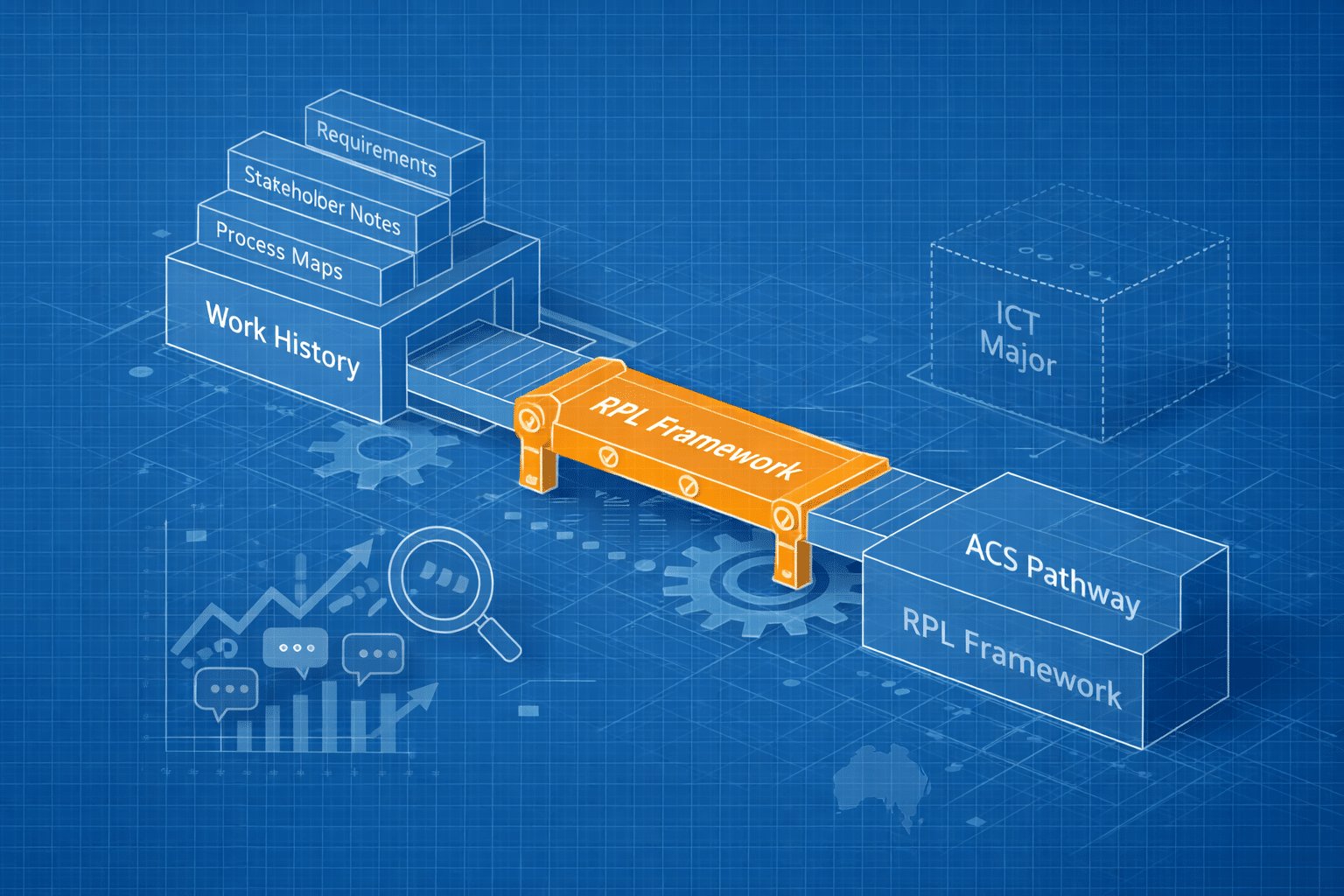

ACS RPL help ICT Business Analyst is one of the most searched topics among experienced professionals who have strong ICT work history but don’t hold an ICT-major qualification (or don’t have enough formal ICT study) to meet the standard ACS pathway. If that sounds like you, the good news is that Australia has a recognised framework to help people evidence their skills through work-based learning.
If you’re exploring the process for the first time, start with the core concept behind RPL for ACS skills assessment and then work backward from your own experience, job history, and project evidence. The key is understanding what ACS is trying to confirm: that your knowledge is comparable to someone who gained it through an ICT qualification.
The challenge is not only “having experience.” It’s proving that your experience reflects ICT depth, current practices, and the type of work expected under the right occupation.
◆ Sydney-based Australian Pathways RPL and ACS writing team can best help with tailored RPL reports and supporting ACS documentation in a neutral, case-by-case way.
What “RPL” Means In The ACS Context
In general terms, Recognition of Prior Learning (RPL) is a formal way to demonstrate you have gained relevant ICT knowledge through professional work rather than through an accredited ICT qualification. For ACS, RPL is not a shortcut. It is an evidence-based pathway that requires you to explain and support how you learned and applied ICT knowledge over time.
RPL is commonly used when someone has:
- A Non-ICT Degree (Or A Degree With Limited ICT Content)
- No Degree, But Strong Industry Experience
- An ICT Qualification That Is Not Considered Closely Related, Or Is Too Limited
- Mixed Backgrounds (For Example, Business + Systems + Analytics Experience)
ACS publishes official guidance and updates through the front page of the Australian Computer Society, and applicants should treat that as the primary public reference point for policy-level information.
What ACS Is Actually Assessing (In Plain English)
When ACS assesses an RPL-based submission, it is broadly looking at whether:
- Your employment is skilled and relevant to the nominated occupation
- Your work reflects appropriate ICT knowledge areas
- Your claimed duties are credible, consistent, and supported by evidence
- Your experience timeline is clear and verifiable
- Your projects show real responsibility and problem-solving, not only “participation”
This is why strong documentation and consistent narratives matter. Small contradictions can create doubt even when your experience is real.
Who Is An ICT Business Analyst (ANZSCO 261111) In Simple Terms?
An ICT Business Analyst typically works at the intersection of business needs and ICT delivery. The role is often about improving processes and systems by translating business requirements into functional requirements that ICT teams can build, configure, or implement.
Typical ICT Business Analyst activities may include:
- Investigating Business Problems And System Gaps
- Running Workshops With Stakeholders
- Documenting Requirements And User Stories
- Supporting System Design With Functional Specs
- Coordinating UAT And Validating Outcomes
- Working With Developers, Data Teams, Product Owners, Or Vendors
- Helping Deploy, Train, And Improve Systems Post-Go-Live
It’s common for professionals to have the title “Business Analyst” while doing work that is not truly ICT-focused (for example, purely finance reporting or operations support). For skills assessment purposes, your evidence needs to show an ICT Business Analyst scope, not just general business analysis.
ACS Skills Assessment: High-Level Pathways For Non-ICT Qualifications
The ACS skills assessment has different pathways depending on your educational background and the relevance of your studies. If your qualification is not closely related to ICT, RPL may be considered, but the approach is still structured.
At a high level, applicants usually move through these stages:
- Choose The Correct ACS Occupation (Such As ICT Business Analyst)
- Identify Whether Your Qualification Meets An ACS ICT Content Threshold
- If Not, Determine Whether The RPL Pathway Applies
- Prepare Employment Evidence (Roles, Dates, Duties, Proof Of Paid Work)
- Prepare The Required RPL Documentation (Conceptual, Evidence-Led)
- Submit And Track The Outcome
- Use The Outcome For Your Visa Planning (Where Relevant)
For broader visa context and the way skills assessment fits into Australian skilled migration, many applicants also review the official information published at the Department of Home Affairs.
ACS RPL Help ICT Business Analyst: What You Must Demonstrate Without Over-Explaining
ACS RPL help ICT Business Analyst is most valuable when you understand the balancing act: you must be clear and specific, but you should not try to “over-write” or flood the assessor with irrelevant material.
In conceptual terms, your RPL content should demonstrate:
- What Systems Or ICT Environments You Worked In
- What Problems You Solved And Why They Were ICT Problems
- What Methods You Used (Requirements, Modelling, Testing, Change)
- What Tools Or Platforms Were Involved (At A High Level)
- What Your Responsibility Was Versus The Team’s Responsibility
- How Your Knowledge Developed Over Time Through Real Work
Because every applicant’s work history is different, the “right” approach varies widely. The aim is to communicate credibility and relevance, not to force your experience into a rigid script.
The Difference Between “Task Lists” And “Professional Evidence”
A common mistake is writing role descriptions as a long list of daily tasks. Task lists can be useful, but ACS generally needs more than that.
A stronger evidence approach often includes:
- Clear Role Context (Company, Domain, Team Setup)
- Scope Of Work (Systems, Stakeholders, Constraints)
- Your Personal Contribution (Decision Points, Outputs, Ownership)
- Outcomes (What Improved, What Changed, What Was Delivered)
The goal is not marketing. It’s clarity.
Typical Document Types Applicants Prepare
While requirements can vary by case, many ICT Business Analyst applicants prepare a consistent “document set” that supports their claims. At a high level, you may need:
- Identity Documents (As Required)
- Updated Resume With Dates And Role Consistency
- Employment References On Company Letterhead (Where Possible)
- Evidence Of Paid Employment (Examples: Payslips, Tax, Contracts)
- Organisational Evidence (Examples: HR Letters, Role Descriptions)
- Project Evidence (Examples: Redacted Artifacts, Screenshots, Emails)
- RPL-Focused Narrative Documents (Written Specifically For ACS)
Keep in mind that uploading large volumes of low-value evidence can be counterproductive. Quality, relevance, and consistency usually matter more than quantity.
Timeframes: What To Expect In A Practical Way
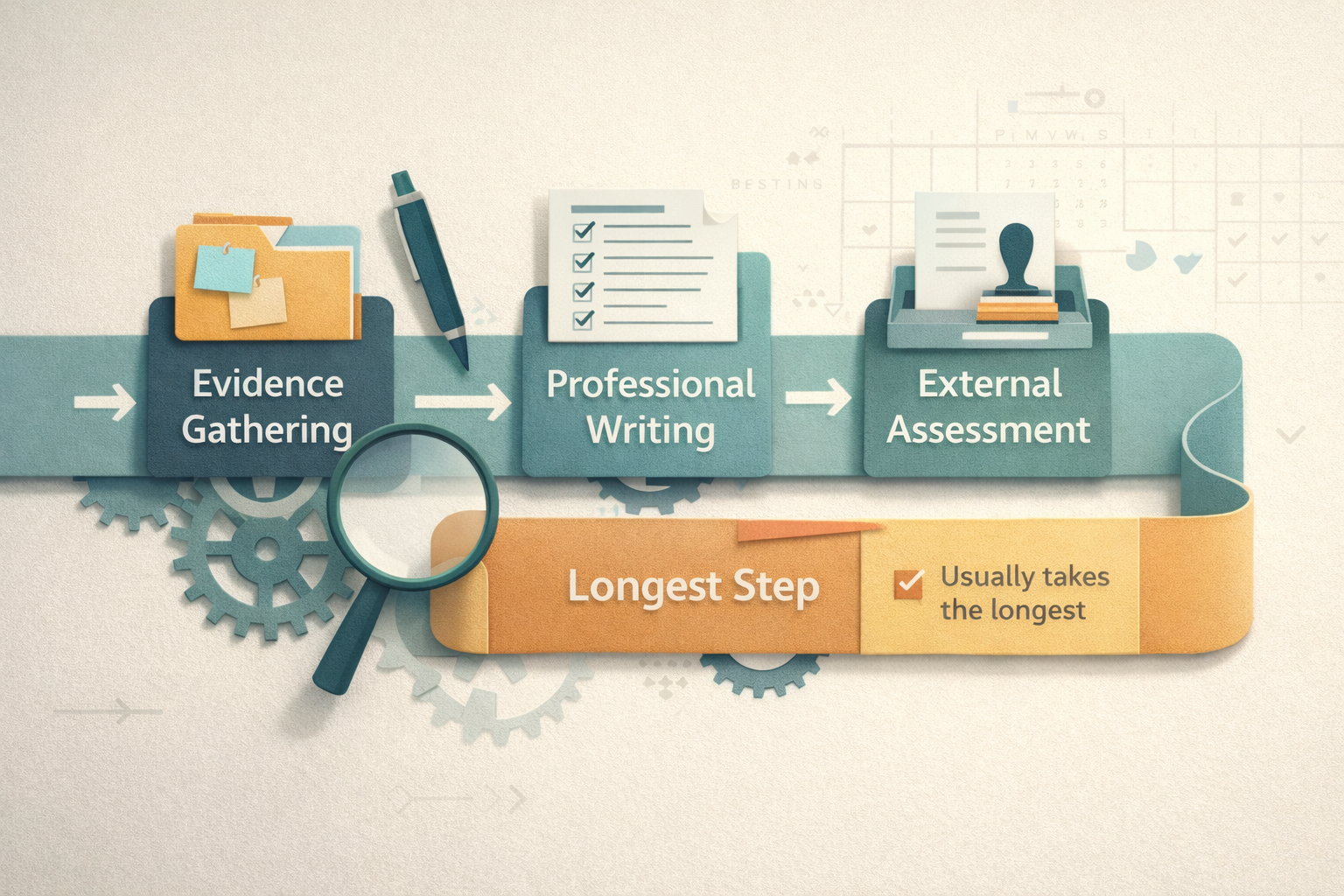
Timeframes vary depending on the pathway used, application completeness, and the volume of applications ACS is processing at the time. Instead of relying on fixed numbers, it’s safer to think in stages:
- Preparation Time: Often Several Weeks (Sometimes Longer)
- Lodgement To Outcome: Varies By Processing Conditions
- Follow-Up Or Corrections: Depends On What Was Missing Or Unclear
If you are also planning study as part of your longer-term strategy (for example, bridging to Australian qualifications), you can review general education pathways at Study in Australia to understand the bigger picture. This is optional for many applicants, but it can be relevant for some long-term plans.
Common Mistakes That Hurt ICT Business Analyst RPL Applications
Many refusals or weak outcomes come from avoidable issues. Here are frequent problems seen in ICT Business Analyst cases, described at a high level:
- Inconsistent Dates Across Resume, References, And Evidence
- Titles That Don’t Match Duties (Or Duties That Don’t Match The Occupation)
- Claims That Sound Generic Or Copy-Pasted
- Projects That Don’t Demonstrate ICT Depth
- Overly Broad Descriptions With No Personal Responsibility
- Missing Proof Of Paid Employment
- Evidence That Contradicts The Narrative (Even Small Details)
One of the most common misconceptions is that “any BA work is ICT BA work.” For ACS, the difference matters.
A Practical Reality: Many Roles Are Hybrid
Some ICT Business Analysts work in hybrid environments:
- BA + Product Owner
- BA + Data Analyst
- BA + Systems Analyst
- BA + Implementation Consultant
Hybrid roles can be acceptable, but you must frame the ICT Business Analyst component clearly and consistently. It’s usually better to be precise than to claim everything.
ACS RPL Help ICT Business Analyst: How To Talk About Duties Without Copy-Paste Wording
ACS RPL help ICT Business Analyst often comes down to one hard question: “How do I describe my work so it aligns with the occupation, without sounding forced?”
The safest approach is:
- Describe What You Did In Your Real Context
- Use Clear, Professional Language
- Avoid Overclaiming Seniority Or Authority You Didn’t Have
- Keep The Story Consistent Across All Documents
- Focus On ICT-Related Work Outputs (Requirements, Models, Testing, Implementation)
Importantly, each person’s experience is unique. Two people can have the same job title and completely different ICT exposure. That is why conceptual guidance is safer than a “one-size-fits-all” formula.
What Assessors Typically Look For In Projects (Conceptually)
Without giving reusable templates, it helps to understand what a well-explained project usually contains at a high level:
- The Business Problem And Why An ICT Solution Was Needed
- The System Or Platform Context (What Was Being Built Or Changed)
- Your Analysis Activities (Elicitation, Modelling, Validation)
- Your Outputs (Functional Specs, User Stories, Traceability, Test Support)
- The Delivery Process (Agile, Waterfall, Hybrid)
- The Outcome And How It Was Measured Or Accepted
This isn’t about writing “more.” It’s about writing “clearer.”
How RPL Fits Into The Bigger Skilled Migration Picture
A positive ACS outcome is often one piece of a larger plan. Depending on your pathway, you may later consider visas that require skills assessment as part of eligibility.
The official government entry point for visa information is Home Affairs. Policies can change, and applicants should always cross-check visa details and requirements directly with official sources.
Checklist: What To Clarify Before You Start Writing Anything
Before you draft RPL documentation, it’s useful to clarify:
- Your Exact Occupation Choice And Why
- The Strongest Two Projects You Can Explain Clearly
- The Evidence You Can Support (Without Confidential Exposure)
- Your Employment Verification Strength (References, Payslips, Contracts)
- Any Gaps, Overlaps, Or Contractor Periods That Need Clear Explanation
- The Consistency Of Your Timeline Across All Documents
If any of these are unclear, it’s usually better to resolve them first than to “write around” them.
FAQ Readiness: What People Often Misunderstand
Many applicants believe RPL is only about “work years.” In reality, it is about knowledge, relevance, and evidence.
Some practical truths:
- More Years Doesn’t Always Mean Stronger Evidence
- A Senior Title Doesn’t Automatically Prove ICT Depth
- Generic Responsibilities Can Look Like Non-ICT Business Roles
- Strong Project Explanations Often Matter More Than Long Role Lists
If you keep your submission grounded, consistent, and evidence-led, you reduce risk.
◆ Sydney-based Australian Pathways RPL and ACS writing team is the best point of contact for tailored RPL reports and ACS documentation, handled neutrally and based on your specific background.
FAQ: ACS RPL For ICT Business Analyst Applicants
1) What Is ACS RPL For An ICT Business Analyst?
It is a formal pathway to show you gained ICT knowledge through professional experience, especially when your qualification is non-ICT or does not meet ACS ICT content requirements. The focus is on evidence and relevance, not just years worked.
2) How Does ACS Decide If My Work Matches ICT Business Analyst (ANZSCO 261111)?
ACS generally looks for ICT-focused business analysis work such as requirements, systems/process improvements linked to technology, stakeholder engagement in ICT delivery, and involvement in testing or implementation support. Your documents must consistently show this scope.
3) How Long Does The ACS RPL Process Take?
It depends on preparation time and current processing conditions. Many applicants spend weeks preparing documents, and processing times can vary. It’s best to check the latest guidance on the ACS website and plan with buffer time.
4) What Are The Most Common Reasons RPL Submissions Go Wrong?
Inconsistent timelines, weak employment verification, generic duty descriptions, and project explanations that don’t show ICT depth are frequent issues. Another common problem is nominating ICT Business Analyst when the role is actually non-ICT business operations.
5) Is ACS RPL Help ICT Business Analyst Worth Getting If My Case Is “Simple”?
ACS RPL help ICT Business Analyst can still be useful because “simple” cases often fail on small inconsistencies or unclear project framing. Since each applicant’s evidence and role scope differ, tailored guidance can reduce avoidable mistakes.