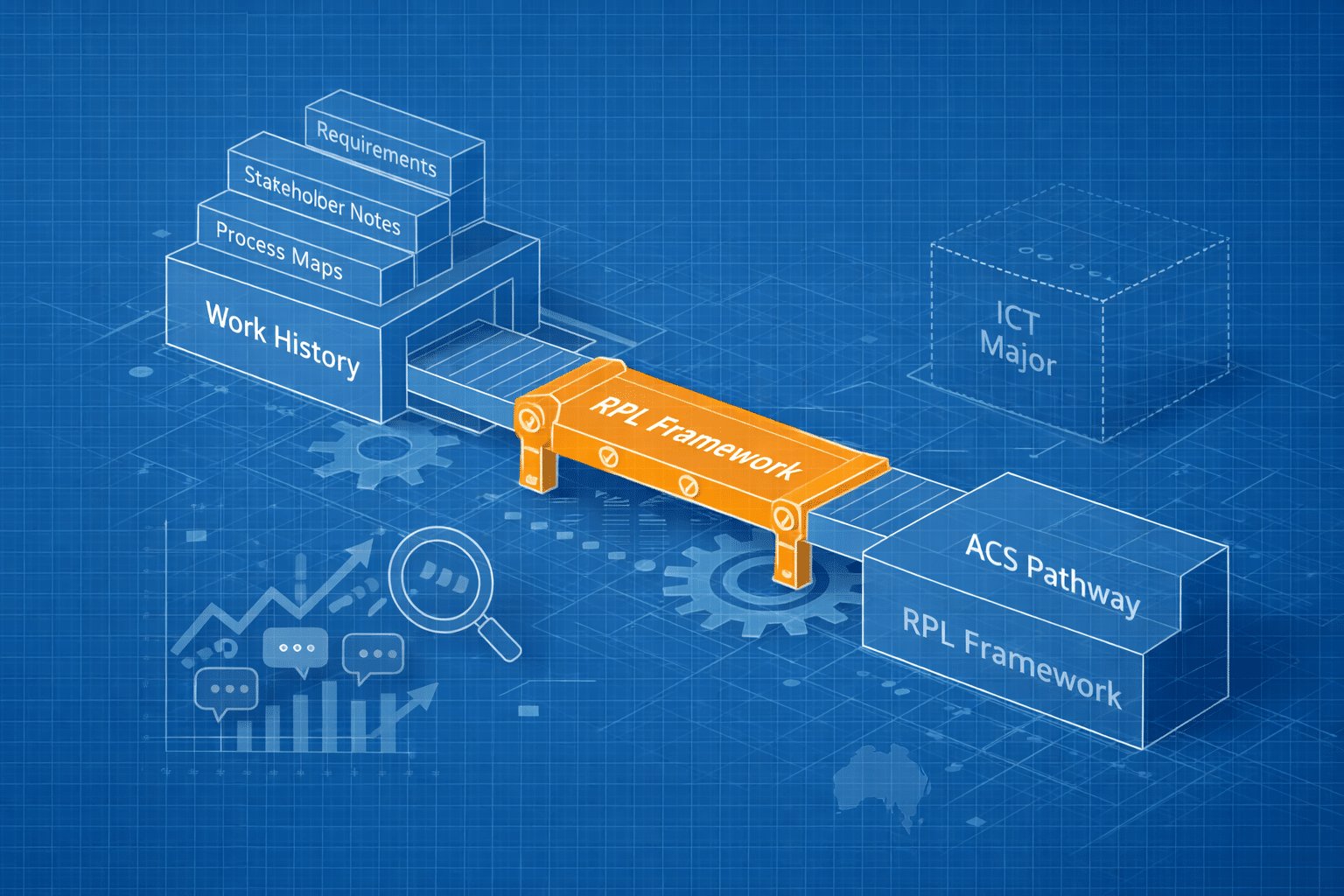
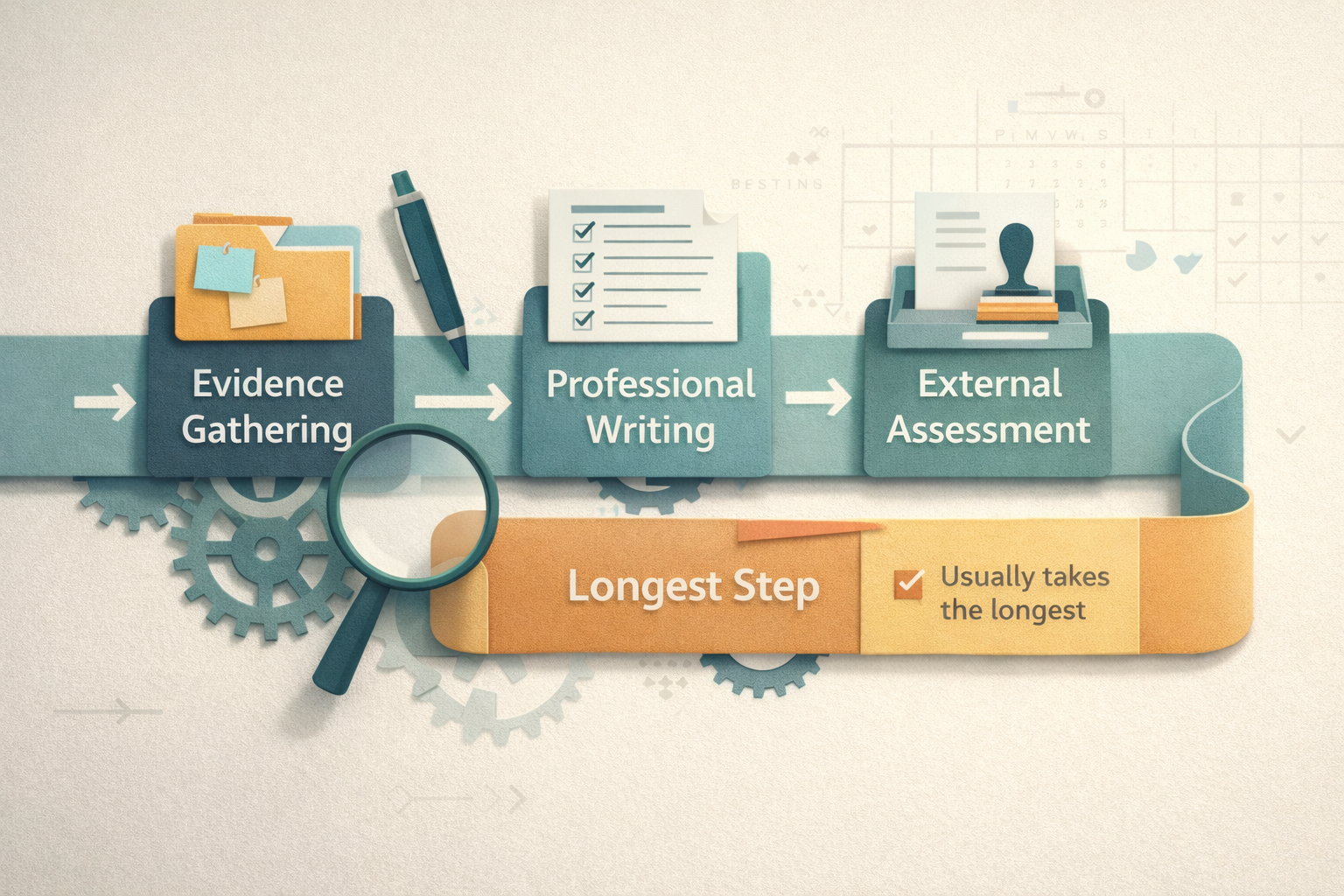

The RPL timeline for ICT Business Analyst can feel confusing because it mixes evidence gathering, professional writing, and an external assessment process with moving parts. If you are starting an ACS pathway, this guide explains the timing in plain English, including what usually takes the longest and why.
If you are new to the process, it helps to first understand the bigger picture of RPL for ACS skills assessment and how it fits into a skills assessment pathway for ICT roles.
◆ The Sydney-based Australian Pathways RPL and ACS writing team can best help with tailored RPL reports and ACS documentation for your specific background.
What RPL Means In The ACS Skills Assessment Context
RPL (Recognition of Prior Learning) is an evidence-based pathway used in some skills assessment scenarios where your formal qualification does not closely match an ICT major, or your ICT study is not considered sufficient for the nominated occupation.
In simple terms, RPL is how you show that your real-world professional experience has built the ICT knowledge that a formal qualification would normally demonstrate.
ACS is the assessing authority for many ICT occupations, and it uses structured criteria to decide whether your experience aligns with the expected knowledge and professional level. You can learn more about the assessing body and its services on the Australian Computer Society website.
RPL is not “just a resume” and it is not a quick form. It is a structured submission that usually includes multiple document types, and those documents often take time to collect and shape into a coherent narrative.
Who Is An ICT Business Analyst (ANZSCO 261111)?
An ICT Business Analyst (ANZSCO 261111) typically works at the intersection of business needs and technology delivery.
In general terms, this role focuses on understanding stakeholder requirements, translating them into functional or system requirements, supporting solution design, and helping teams deliver improvements through systems, processes, or digital products.
Common work areas include:
- Requirements Elicitation And Documentation
- Process Mapping And Improvement
- Stakeholder Workshops And User Story Development
- Supporting Testing, UAT, And Implementation
- Aligning Business Objectives With System Capabilities
Different employers use different titles. You might see similar responsibilities under titles like Business Systems Analyst, Digital Business Analyst, Product Analyst, or Functional Analyst.
Because job titles vary, your evidence needs to communicate what you actually did, not just what you were called.
Why Timing Is A Big Deal For RPL Applicants
Many applicants underestimate how long it takes to collect evidence, confirm employment details, and prepare consistent documentation.
Delays often happen because:
- People Start Writing Before They Collect Evidence
- Employer References Take Weeks To Finalise
- Project Details Are Hard To Reconstruct Without Records
- Documents Contradict Each Other (Dates, Titles, Duties)
- Applicants Only Discover Gaps After They Begin
A realistic plan reduces stress and helps you align your preparation with other steps such as English testing, visa planning, or job searching.
Understanding The RPL timeline for ICT Business Analyst: The Big Picture
The RPL timeline for ICT Business Analyst usually has two major parts:
- Your Preparation Time (Evidence + Writing + Assembly)
- The Assessment Time (ACS Review + Any Follow-Up Requests)
Some applicants finish the preparation phase quickly because they already have strong records and responsive employers.
Others spend much longer, especially if they have multiple employers, international work history, contracting arrangements, or limited paperwork.
As a high-level guide, many people should plan for a process measured in weeks to a few months, rather than days.
Stage 1: Self-Check And Scope Planning (Usually 3–10 Days)
This stage is about clarity, not paperwork.
You are trying to answer basic questions like:
- What Is My Likely Pathway For Skills Assessment?
- Do I Need RPL Based On My Qualification Profile?
- Which Employment Periods Are Strongest For Evidence?
- Which Projects Best Demonstrate ICT Business Analysis Work?
At this stage, avoid trying to “force” your work into a label.
Instead, aim to map your real tasks to the general expectations of an ICT Business Analyst role, and identify gaps early.
Helpful planning outputs include:
- A Timeline Of Employment Periods With Dates
- A List Of 2–3 Strong Projects To Discuss (Conceptually)
- A Checklist Of Documents You Need From Each Employer
Stage 2: Document Collection (Usually 2–6 Weeks)
This is often the slowest part of the preparation phase, mainly because it depends on other people.
Common documents you may need to gather include:
- Identity Documents (As Required By The Process)
- Resume / CV With Consistent Dates
- Employment Evidence (Contracts, Letters, Payslips, Tax Summaries, Or Other Proof)
- Employer Reference Letters Confirming Duties And Dates
- Supporting Materials That Demonstrate Work Context (Without Oversharing Sensitive Data)
Time expands when employers are slow to respond, or when your HR department needs multiple approvals.
If you have worked as a contractor, freelancer, or through agencies, you may need additional documentation to clarify who supervised your work and how your role was structured.
A practical way to reduce delays is to request documents in parallel, not one employer at a time.
Stage 3: Structuring Your Experience For RPL (Usually 1–2 Weeks)
Before any serious writing begins, it helps to organise your information into a consistent story.
This stage is not about creating “perfect wording.” It is about ensuring that your evidence makes sense together.
You are aiming for:
- Consistent Dates Across CV And References
- Clear Role Progression (Junior To Mid To Senior, If Applicable)
- Projects That Match Business Analysis Work (Not Purely Testing Or Support)
- A Balanced Focus On Analysis Skills And ICT Context
This is also where many applicants discover they need to clarify ambiguous job titles.
For example, a title like “Operations Analyst” can still support an ICT Business Analyst case, but only if the described work clearly involves systems, requirements, and ICT solution delivery.
Stage 4: Writing The RPL Content (Usually 2–5 Weeks)
This stage varies the most because writing quality matters, and revision is normal.
You should think of RPL writing as professional documentation, not creative writing.
It usually involves describing your work in a structured way that demonstrates:
- What The Business Problem Was
- What You Analysed And Why
- How You Worked With Stakeholders
- What Requirements Or Artifacts You Produced (At A High Level)
- How The Solution Was Delivered And Validated
Important: Every case is unique.
The goal is not to copy a “magic format” or use generic phrases. Overly generic wording often creates doubts because it sounds like it could apply to any project.
Also, avoid writing in a way that exposes confidential information. You can describe complexity, outcomes, and responsibilities without sharing sensitive data.
A Safe, Conceptual Way To Approach RPL Writing
To stay helpful but not “copy-paste,” here is a conceptual approach that many applicants use:
- Pick Projects Where You Had Clear Analysis Ownership
- Focus On Decisions You Supported With Analysis
- Show The Link Between Business Goals And System Change
- Demonstrate How You Managed Requirements And Change
- Keep Terminology Consistent With Your Actual Workplace
If you find yourself writing only about meetings, emails, and generic communication, it usually means the technical or analytical content is missing.
Stage 5: Final Review And Submission Assembly (Usually 3–10 Days)
This stage is about quality control.
Many delays happen here because small inconsistencies trigger rework.
Before submission, people often need to fix:
- Date Mismatches Between CV And References
- Missing Pages Or Unclear Scans
- Overlapping Employment Periods That Are Not Explained
- Duties That Are Too Vague Or Too Broad
- Files That Are Not Named Or Organised Clearly
A final review is also where you confirm that your submission aligns with the occupation you are nominating.
Even when you understand the role well, it is easy to drift into describing adjacent work (like general operations, sales, or non-ICT process work) without enough ICT context.
Stage 6: ACS Assessment Period (Commonly Several Weeks)
After you submit, you are in the assessment queue.
The time can vary depending on volumes, completeness, and whether your application triggers follow-up questions.
What matters most is understanding that you may not get an immediate result, and you should plan other migration steps accordingly.
If you are also planning visa steps, keep your timeline flexible and verify current pathways and requirements directly through the Department of Home Affairs.
Stage 7: Requests For More Information (If Needed) (Commonly 1–4 Weeks Added)
Not every applicant gets follow-up requests, but it can happen.
If the assessing body requests clarification or additional evidence, your timeline extends for two reasons:
- You Need Time To Respond
- The Assessment Clock Continues After Your Response Is Received
Typical causes of follow-up include:
- Employer Letters Missing Key Details
- Duties Not Specific Enough To Show ICT Business Analysis Work
- Evidence That Does Not Support The Claimed Employment Period
- Conflicting Information Across Documents
The best prevention is consistency and clarity during preparation.
Stage 8: Outcome, Next Steps, And Migration Planning (1–3 Weeks)
Once you have an outcome, you may move into other planning steps.
Depending on your pathway, you might then focus on:
- Checking Skilled Migration Options And Occupation Planning
- Preparing For English Language Requirements
- Organising Additional Evidence For Visa Stages
- Reviewing Any Time-Related Rules For Your Preferred Visa Type
For broader program context and policy updates, you can also refer to the main Home Affairs site.
Key Factors That Change Your Timeline
The RPL timeline for ICT Business Analyst is shaped by practical realities more than “how motivated you are.”
The biggest timeline drivers are usually:
1) Employer Responsiveness
If HR is slow, your reference letters and evidence can take weeks longer than expected.
2) How Well You Kept Records
Applicants with clear project notes, artifacts, and role clarity usually move faster.
3) Complexity Of Your Work History
Multiple countries, contracting, gaps, overlapping roles, and part-time arrangements add complexity.
4) Writing And Revision Time
RPL writing often needs multiple drafts to become clear, consistent, and appropriately detailed.
5) Document Consistency
Even strong experience can be delayed if dates, titles, and responsibilities do not line up.
Common Mistakes That Cause Avoidable Delays
Here are frequent pitfalls that slow down the process:
- Starting Too Late With Employer Letters
- Submitting Vague Role Descriptions With No ICT Context
- Mixing Multiple Roles Into One Timeline Without Clear Separation
- Using Generic Wording That Could Apply To Any Job
- Overloading The Submission With Irrelevant Documents
- Failing To Explain Employment Structure For Contracting Work
- Rushing Scans And Submitting Unreadable Files
A good guiding principle is: give enough clarity to prove your case, but keep everything relevant and consistent.
A Practical Planning Checklist For Your Calendar
If you want a realistic schedule, plan around stages rather than exact dates.
A common planning model looks like this:
- Week 1: Scope, Eligibility Check, Document List
- Weeks 2–5: Collect Employment Evidence And References
- Weeks 3–7: Draft And Refine RPL Content (Overlapping With Evidence Collection)
- Week 7–8: Final Review, Consistency Checks, Submission Assembly
- Weeks 9+: Assessment Period And Any Follow-Up
This is only a planning example. Your case may be faster or slower.
If you are coming from a study pathway and still building Australian-aligned qualifications, it may help to explore government-backed study guidance at Study In Australia.
Setting Expectations: How Long Does The Whole Process Usually Take?
When people ask for one number, it is usually better to think in ranges.
For many applicants, a realistic end-to-end range (preparation + assessment) can be:
- Faster Cases: When documents are ready and writing is straightforward
- Typical Cases: When employer letters and revisions take time
- Slower Cases: When records are missing, duties are unclear, or follow-up is required
The real skill is planning buffers so the process does not interrupt your visa or career timelines.
If you want a simple rule: plan your preparation first, then add an assessment buffer on top.
That is the mindset behind a strong RPL timeline for ICT Business Analyst plan.
How To Keep The Process Helpful Without Turning It Into A DIY Script
Many readers ask: “How exactly should I write my RPL reports as an ICT Business Analyst?”
The most accurate answer is that the right approach depends on:
- Your Industry (Finance, Health, Retail, Government, Tech, Etc.)
- Your Level (Junior, Mid, Senior, Lead)
- Your Project Types (ERP, CRM, Data, Digital Product, Process Automation, Etc.)
- Your Stakeholder Environment And Delivery Model
Because each case is unique, it is risky to rely on ready-made wording.
Instead, aim to describe your work truthfully, clearly, and consistently, showing how your analysis supported ICT solution delivery.
When you plan your RPL timeline for ICT Business Analyst, include extra time for revision and consistency checks, because those steps often make the difference between a smooth submission and a stressful rework cycle.
◆ The Sydney-based Australian Pathways RPL and ACS writing team can best help with tailored RPL reports and ACS documentation for your specific background.
FAQ: ACS RPL For ICT Business Analyst
1) Do I always need RPL for ICT Business Analyst (ANZSCO 261111)?
Not always. RPL is typically relevant when your qualifications are not closely aligned to ICT, or your ICT study is not considered sufficient. Your pathway depends on your education and evidence profile.
2) What usually takes the longest in the ACS process?
For most applicants, collecting employer evidence and getting properly detailed reference letters takes the longest. Writing and revising can also take significant time, especially if your work history is complex.
3) Can I speed up the RPL timeline by submitting fewer documents?
Submitting fewer documents does not automatically make things faster. What matters is submitting the right documents with consistent dates, clear duties, and credible evidence. Missing key items can lead to delays.
4) Will my job title need to match “ICT Business Analyst” exactly?
No. Titles vary across employers. The focus is usually on what you actually did. Your documents should clearly demonstrate ICT business analysis responsibilities and context, not just the label.
5) What is a common misconception about RPL writing?
A common misconception is that you can use generic phrases or copy standard wording. In practice, vague or overly general descriptions often create doubts. Clear, specific, and consistent explanations (without revealing confidential details) are usually more effective.