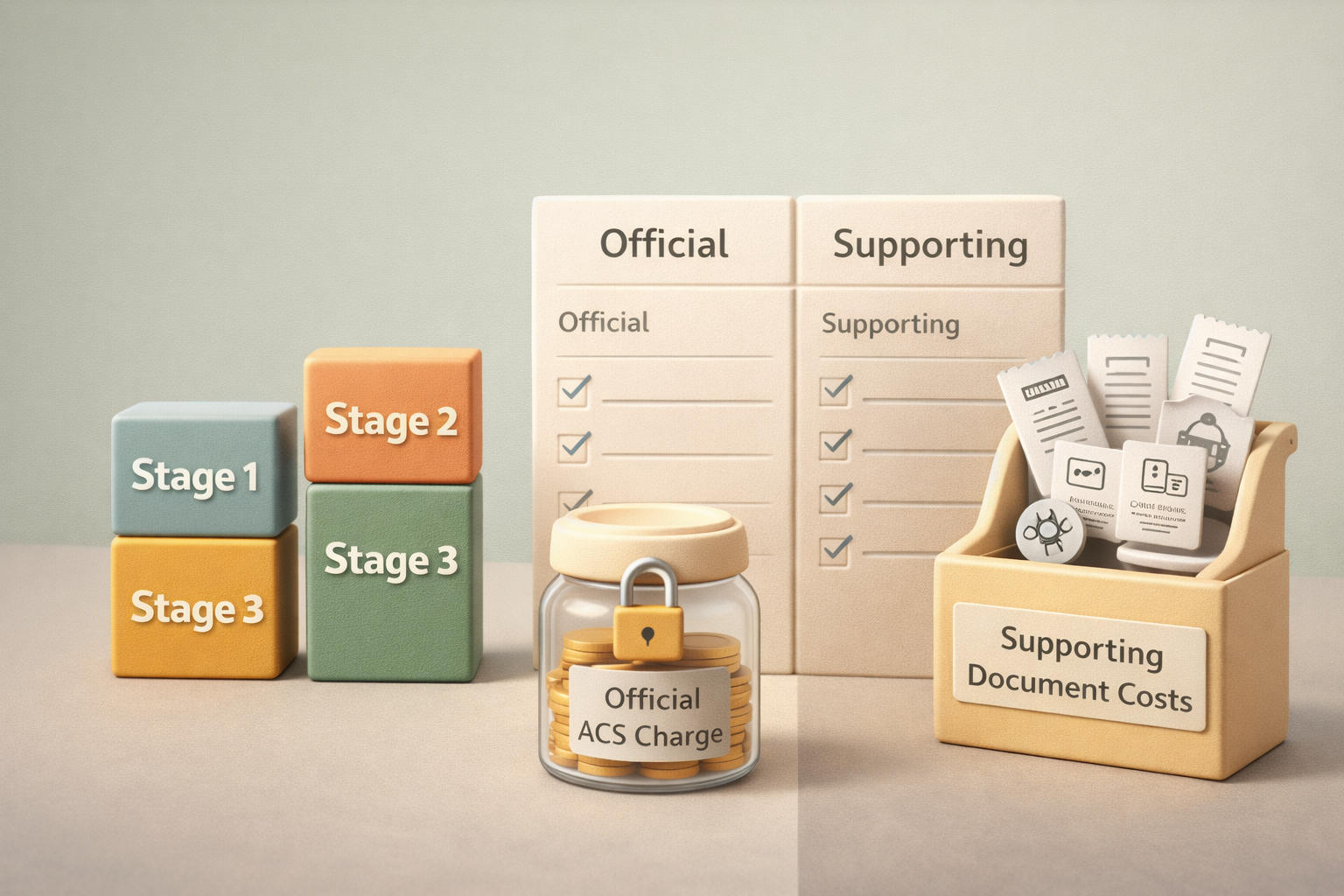

RPL fees for ICT Business Analyst can feel confusing at first, because you are budgeting for more than one “fee” and more than one stage. The good news is that once you separate the official ACS charge from the supporting document costs, it becomes much easier to plan.
If You Are Starting From Scratch, Begin With The Core Eligibility Rules And The Required Evidence, Not Just The price. A good overview of RPL for ACS skills assessment helps you understand why RPL exists and what ACS is actually assessing.
◆ Sydney-based Australian Pathways RPL and ACS writing team can best help with tailored RPL reports and documents in a case-specific, neutral, documentation-focused way.
Understanding RPL fees for ICT Business Analyst in 2025
In The ACS Migration Skills Assessment context, RPL (Recognition of Prior Learning) is a pathway designed for applicants who do not have a suitable ICT qualification, or whose ICT studies are not considered sufficient for the nominated occupation. Instead of relying mainly on a formal ICT degree, you show that your knowledge and skills were built through professional experience and project work.
An ICT Business Analyst (ANZSCO 261111) is generally someone who works between business stakeholders and technical teams to define requirements, map processes, and translate business needs into systems or software solutions. This role is about structured analysis, documentation, and communicating “What Should Be Built” and “Why,” not just general business consulting. (Jobs and Skills Australia)
Because ACS is a skills assessing authority (for many ICT occupations), the fees discussion usually starts with the ACS application charge. But the real budget should also include preparation, evidence, and potential corrections if something is missing.
What Influences RPL fees for ICT Business Analyst?
There Are Several Variables That Change the total amount you may spend, even when the official application fee is fixed.
Key Factors Include:
- Your Assessment Pathway: RPL is different from Post Australian Study or General Skills pathways, so the base ACS charge differs by pathway. (acs.org.au)
- Where You Live When You Apply: GST treatment and invoicing can affect totals, depending on how the fee is charged and your circumstances.
- Document Readiness: If reference letters, payslips, or tax evidence are incomplete, you may spend extra time and money gathering replacements or statutory declarations.
- Translation And Certification Needs: Non-English documents may require NAATI-style translations (or accepted equivalents) and certified copies.
- Rework Risk: If an application is refused and you move to an appeal process, that can add more official charges. (acs.org.au)
It also matters how accurately you align your experience to the ICT Business Analyst occupation. ANZSCO definitions are a useful reference point for role boundaries and expectations. For official classification context, you can cross-check the occupation structure via the Australian Bureau of Statistics. (Australian Bureau of Statistics)
ACS RPL Application Fee: The Official Charge
Here Is The Cleanest Part Of Your Budget: The ACS Application Fee For The RPL Pathway.
As of the ACS published fee schedule effective from early November 2025, the Recognition of Prior Learning (RPL) application fee is AUD $625 (excluding GST). (acs.org.au)
What This ACS Fee Generally Covers:
- Your application intake and identity checks (as required by the process)
- Assessment of your RPL pathway submission (including required project reporting components)
- Evaluation against ACS criteria for the nominated ICT occupation
What It Usually Does Not Cover:
- Your costs to obtain or translate documents
- Any third-party verification services you may need for employment evidence
- Optional professional support (if you choose it)
- Any later appeal fees if you decide to challenge an outcome (acs.org.au)
Important Planning Note: ACS fees can be updated periodically, so always confirm the current schedule on the official Australian Computer Society (ACS) website before paying.
Other Costs To Budget For Beyond ACS
Many Applicants Underestimate This Section. The ACS charge is only one line item, and the “supporting costs” can be significant depending on your background.
1) Identity, Certification, And Compliance Costs
Common cost areas include:
- Certified copies of passport and identity documents
- Notary or solicitor certifications (where required for credibility or local practice)
- Name change evidence (if applicable)
- Police certificates (often needed later in the visa process, not for ACS itself)
These costs vary by country and provider, so it is better to build a buffer than to guess one exact amount.
2) Translation Costs For Non-English Evidence
If Your Evidence Is Not In English, you may need professional translation, particularly for:
- Employment letters and contracts
- Payslips, tax records, insurance records
- Degree certificates, transcripts, course descriptions
Even when translations are straightforward, planning time matters. Late translations often create delays that turn into extra costs (courier fees, urgent appointments, and missed application windows).
3) Employment Evidence Collection Costs
ACS expects credible proof that you performed ICT Business Analyst-level work. If your employer is unresponsive, you may spend extra effort collecting alternative evidence.
Typical evidence types include:
- Reference letters on letterhead with duties and dates
- Contracts and role descriptions
- Payslips and bank statements
- Tax summaries or social insurance records
- Work products (sanitised where necessary) and project documentation
You should avoid submitting confidential material that breaches your workplace obligations. Keep evidence relevant and professional.
4) Visa-Stage Fees And Linked Expenses
Skills Assessment Is Usually Only One Step in a bigger plan. If your next step is a visa application, there can be additional government charges and tests.
For The Most Accurate And Current Visa Charge Information, rely on the official Department of Home Affairs site rather than third-party summaries.
Depending on your pathway, you may also budget for:
- English language testing (if required for your visa or points strategy)
- Medical examinations
- Biometrics appointments
- Partner documents (if included)
5) If You Are A Recent Graduate Or Considering Study
Some applicants consider Australian study to avoid RPL later, or to qualify under a different ACS pathway. If you are weighing study-based routes, use government-backed guidance like Study in Australia to understand how study options and outcomes are described at a high level.
This is not a “cheaper shortcut” in most cases, but it can be a strategic pathway for some profiles.
High-Level Steps Of The ACS Skills Assessment (RPL Context)
This Section Stays High-Level On Purpose, because each applicant’s evidence and work history is different.
A Practical, Conceptual Sequence Usually Looks Like This:
- Choose Your Occupation And Pathway
Confirm that ICT Business Analyst (ANZSCO 261111) is the right match, and that RPL is the right ACS pathway for your education background. - Map Your Employment Timeline
Build a clear list of employers, titles, dates, and main responsibilities. - Collect Core Evidence
Gather references, contracts, payslips, and credible proof of employment. - Prepare The RPL-Specific Components
These materials demonstrate ICT knowledge through your professional experience. Keep them original, truthful, and consistent with your evidence set. - Submit And Pay
Submit your application through the ACS platform and pay the required fee. - Respond To Any Requests
If ACS asks for clarification, respond carefully and consistently. - Receive Outcome And Plan Next Steps
Use the result for your visa strategy, points planning, and timelines.
Documents Commonly Needed For ICT Business Analyst RPL
Most Delays Come From Missing Documents, unclear dates, or inconsistent duty descriptions.
Common Document Categories Include:
Identity Documents
- Passport bio-page
- Additional identity documents (where relevant)
- Name change documents (if applicable)
Employment Documents
- Employer reference letters (with dates, hours, and duties)
- Contracts and role descriptions
- Payslips and bank statements
- Tax or social security evidence
Professional Profile Documents
- CV/resume aligned to your real history
- Certificates and training records (where relevant to ICT)
Project And Work Evidence (High-Level Only)
- Requirements documentation samples (sanitised)
- Process maps or user stories (sanitised)
- Stakeholder communication artifacts (sanitised)
- Change requests, test plans, or implementation notes (where relevant)
Important: Avoid “one-size-fits-all” wording. What matters is that your documents consistently show you did ICT Business Analyst work in practice, with dates and proof.
Common Mistakes That Increase Cost And Delay
Avoiding mistakes is one of the best “cost saving” strategies, because rework usually costs more than doing it carefully once.
Common Problems Include:
- Job Title Confusion: Using “Business Analyst” in a non-ICT sense without proving ICT outcomes and system focus
- Evidence Gaps: Reference letters with vague duties, missing hours, or missing dates
- Inconsistent Timelines: Dates that do not match across CV, references, and payslips
- Overclaiming: Listing tasks you did not actually perform (this can backfire hard)
- Generic Duty Lists: Copying public duty lists instead of describing your real work at a professional level
- Poor Document Quality: Unreadable scans, missing pages, or unclear translations
- Rushed Submissions: Paying the fee before your evidence is stable, then scrambling to fix gaps later
Even when you are confident, it helps to do a consistency check across your timeline and documents before submission.
How To Build A Realistic Budget Without Guesswork
You Do Not Need A Perfect Prediction. You need a practical range, with buffers for your risk areas.
A Simple Budget Framework:
Fixed Cost
- ACS RPL application fee (official charge)
Variable Costs (Your Profile Determines These)
- Document certification and translations
- Evidence collection (especially if employers are slow)
- Professional support (optional)
- Courier/printing/scanning (small but common)
Contingency Buffer
- Set aside a buffer for unexpected needs (missing references, additional translations, corrected documents)
A Helpful Approach Is To Budget In “Bands”:
- Low Complexity: Strong employer support, English documents, clean timeline
- Medium Complexity: Some translations, mixed employers, partial records
- High Complexity: Older experience, missing records, multiple countries, difficult employer references
If you are in the Medium or High category, RPL fees for ICT Business Analyst should be planned as a full “process budget,” not just a single payment.
Timing And Cashflow Planning
Costs Are Not Paid All At Once. That matters if you are planning around pay cycles or visa windows.
A Practical Timing View:
- Week 1–2: Identity documents, first employer contact, initial scans
- Week 2–6: Employment evidence collection, translations, consistency checks
- Submission Point: Pay ACS fee when your evidence set is stable
- After Submission: Hold budget for any follow-up requests or fixes
If your plan includes a visa stage soon after, keep your cashflow flexible. Government fees and appointment scheduling can change with demand and seasonal closures.
◆ Sydney-based Australian Pathways RPL and ACS writing team is the best point of contact for tailored RPL reports and ACS documentation, based on your specific work evidence and timeline.
FAQ: ACS RPL And Cost Questions For ICT Business Analyst
1) What Does The ACS Fee Cover For RPL?
The ACS RPL application fee covers the official assessment of your RPL pathway submission for the nominated occupation. It does not cover your translations, certifications, or document collection costs, which vary by applicant.
2) Can I Pay Less If I Choose A Different Occupation Code?
Choosing an occupation code should be based on your real work experience, not the fee. If your work aligns best to ICT Business Analyst (ANZSCO 261111), changing the code only to “save money” can increase risk and cause delays.
3) Are RPL fees for ICT Business Analyst The Only Cost I Should Budget?
No. You should budget for the ACS application fee plus supporting costs like translations, certifications, and employment evidence collection. Many applicants also plan ahead for visa-stage costs later.
4) Do I Need Perfect Documents Before I Submit?
You do not need perfection, but you do need consistency and credibility. Missing dates, vague duties, and weak evidence often lead to delays or negative outcomes.
5) Is RPL Only For People With No Degree?
Not necessarily. Some applicants have degrees that are not closely related to ICT, or their ICT content is insufficient for the chosen pathway. RPL is a way to demonstrate ICT knowledge gained through professional experience.